Amastus coccinator
Common NameAmastus coccinator
Scientific NameAmastus coccinator
FamilyErebidae
SubfamilyArctiinae
Wingspan (mm)45
Primary Colorsbrown, orange, red, white, black
HabitatTropical and subtropical forests, cloud forests
Geographic RangeCentral America, South America (e.g., Costa Rica, Panama, Colombia, Ecuador, Peru, Bolivia)
Host Plantsunknown, likely polyphagous on various low-growing plants
Flight PeriodYear-round in tropical regions, with multiple broods
Flight Stylefluttering
Conservation Statusleast-concern
Lifecycle NotesLike most moths, it undergoes complete metamorphosis: egg, larva (caterpillar), pupa, and adult. Larvae are typically hairy, a common trait in the Arctiinae subfamily.
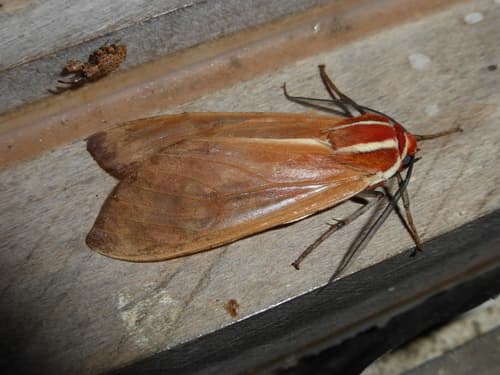
Identification TipsKey identification features include the plain brownish-orange forewings contrasted sharply with the bright red head and thorax, which bears a distinctive white dorsal stripe. The red abdomen with black markings (though not clearly visible in this image) also aids in identification.
Description
This moth features dull brownish-orange forewings, often with a slightly darker margin. Its most distinctive characteristic is the bright red head and thorax, which is adorned with a prominent white longitudinal stripe down the middle.