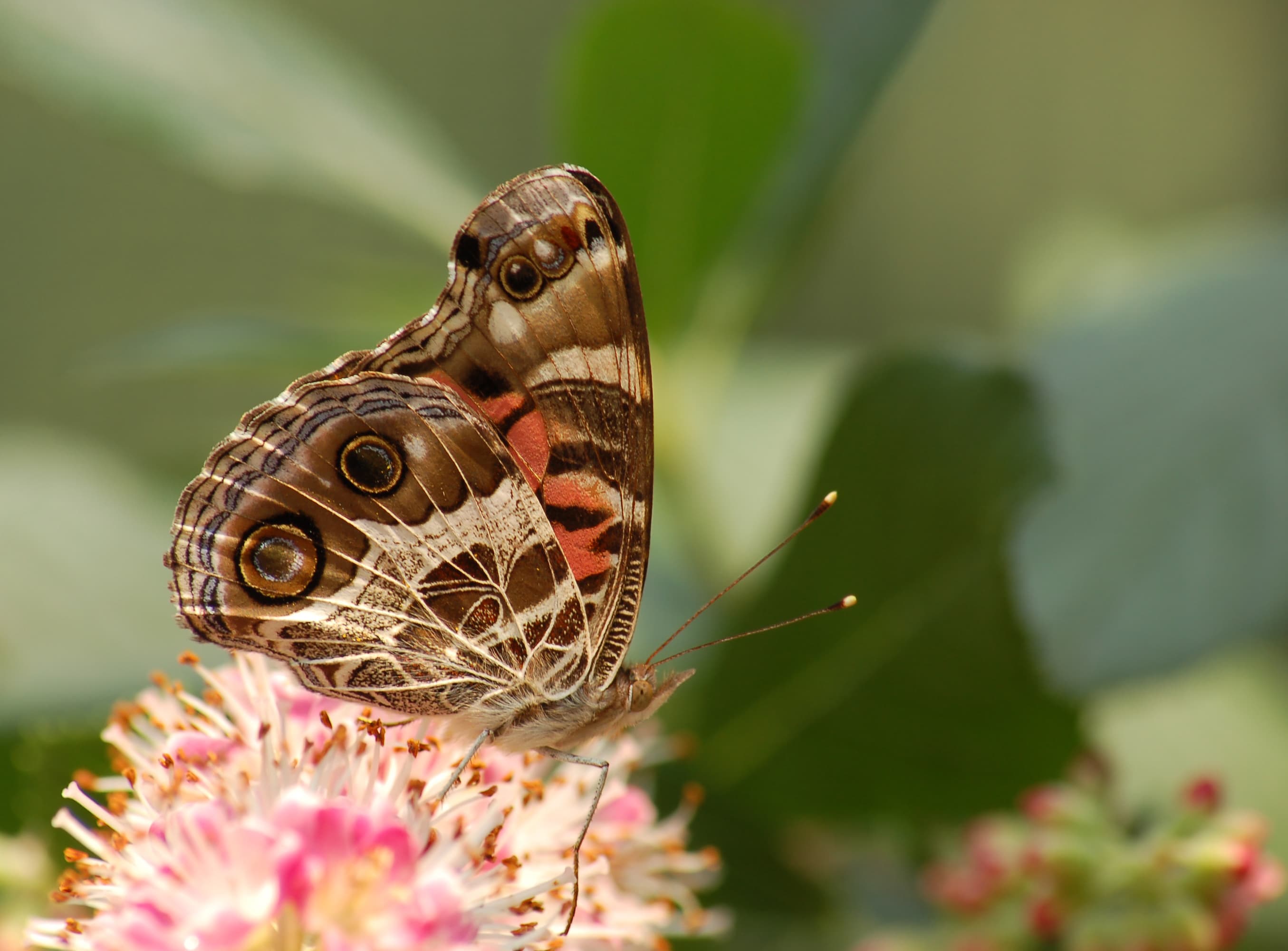
American Lady
Common NameAmerican Lady
Scientific NameVanessa virginiensis
FamilyNymphalidae
SubfamilyNymphalinae
Wingspan (mm)50
Wing Patternspotted
Primary Colorsbrown, white, black, orange
HabitatOpen fields, meadows, gardens, disturbed areas, forest edges
Geographic RangeNorth America, Central America, parts of Europe, Asia, and Africa (migratory)
Host PlantsPearly Everlasting (Anaphalis margaritacea), Plantain-leaved Pussytoes (Antennaria plantaginifolia), Thistles (Cirsium spp.)
Flight PeriodMultiple broods from spring to fall in temperate regions, year-round in warmer climates
Flight Stylegliding
Conservation Statusleast-concern
Lifecycle NotesEggs are laid singly on host plants. Caterpillars are spiny and construct silk nests on their host leaves. The chrysalis is spiny and often camouflaged.
Identification TipsDistinguished from similar Vanessa species by the two large, prominent eyespots on the ventral hindwings. Dorsally, it has a white spot within the orange forewing patch, unlike the Painted Lady (Vanessa cardui) which has a row of small eyespots on the ventral hindwing and no white spot in the forewing patch.
Description
A medium-sized butterfly, the American Lady exhibits a striking ventral pattern of mottled browns, whites, and blacks, prominently featuring two large, distinct eyespots on the hindwings. The forewings ventrally show a mix of orange, black, and white markings.