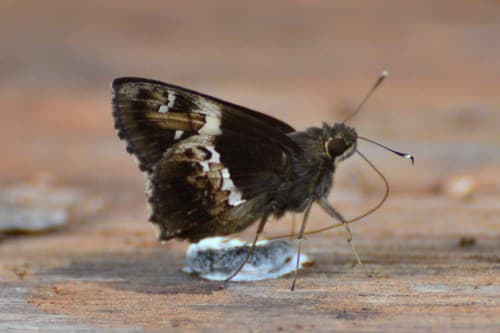
Aster Tentiform Blotchminer
Common NameAster Tentiform Blotchminer
Scientific NamePhyllonorycter asteris
FamilyGracillariidae
SubfamilyLithocolletinae
Wingspan (mm)6.5
Wing Patterncryptic
Primary Colorsbrown, cream, white
HabitatMeadows, open woodlands, roadsides, and gardens where host plants grow
Geographic RangeEastern North America
Host PlantsSymphyotrichum novae-angliae, Symphyotrichum lateriflorum, Symphyotrichum puniceum, Symphyotrichum cordifolium, Symphyotrichum undulatum, Symphyotrichum ericoides
Flight PeriodMay to June, July to September
Flight Stylefluttering
Conservation Statusleast-concern
Lifecycle NotesLarvae are endophagous leaf miners, creating a characteristic 'tentiform' blotch mine on the underside of leaves of various Symphyotrichum (aster) species. Pupation occurs within the mine, and there are typically two or more generations per year.
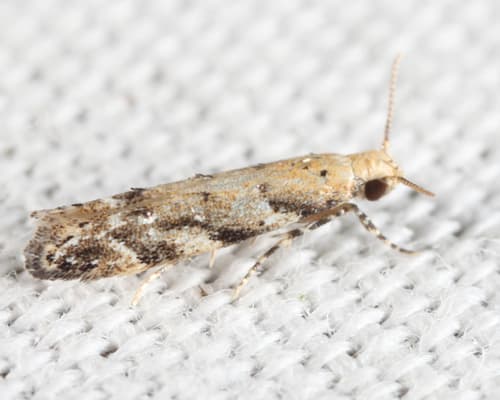
Identification TipsKey features include its very small size, tent-like resting posture, and mottled brown/cream forewing pattern. Definitive identification often relies on examining the specific tentiform blotch mine created by the larva on aster host plants, as many Phyllonorycter species are morphologically similar. The reddish eyes are also a noticeable feature.
Description
A very small moth with a slender body and wings held in a distinctive tent-like posture over its back. Its forewings are a mottled pattern of light and dark brown, cream, and white scales, often with darker markings and prominent reddish compound eyes.