Beet Armyworm Moth
Common NameBeet Armyworm Moth
Scientific NameSpodoptera exigua
FamilyNoctuidae
SubfamilyNoctuinae
Wingspan (mm)20
Wing Patterncryptic
Primary Colorsbrown, grey, orange
HabitatAgricultural fields, gardens, disturbed areas, open woodlands
Geographic RangeCosmopolitan (tropical and subtropical regions worldwide, extending into temperate zones)
Host Plantssugar beet, cotton, corn, alfalfa, beans, peas, potatoes, tomatoes, peppers, onions, cabbage, broccoli, lettuce, spinach, chrysanthemum, carnation, geranium
Flight PeriodYear-round in warm climates; multiple generations from spring to fall in temperate regions
Flight Stylefluttering
Conservation Statusleast-concern
Lifecycle NotesEggs are laid in clusters, covered with scales. Larvae (armyworms) are polyphagous pests, feeding on a wide variety of plants. Pupation occurs in the soil.
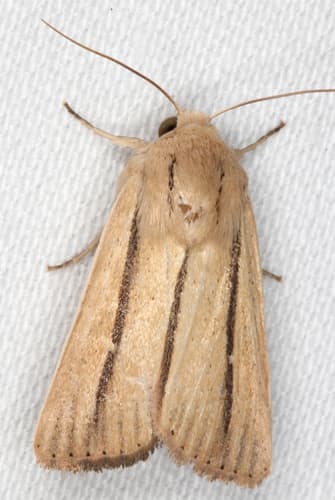
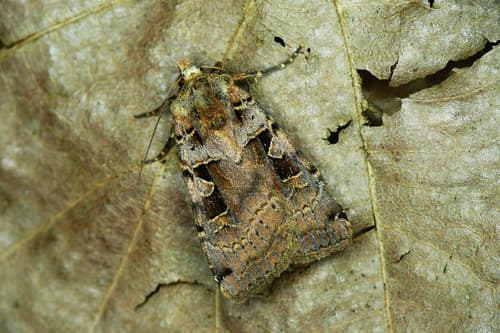
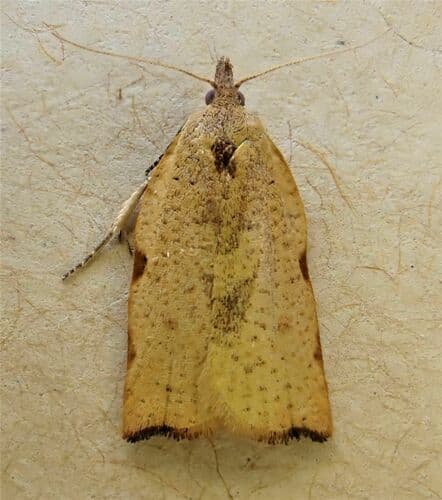
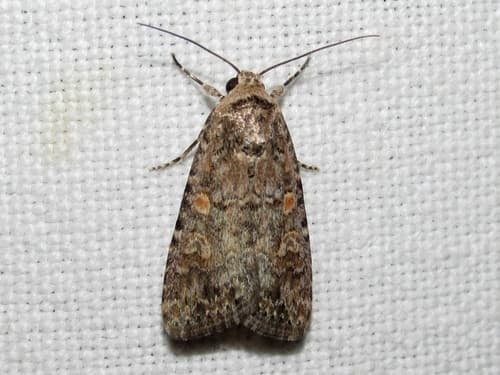
Identification TipsLook for the mottled brown/grey forewings with a distinct kidney-shaped (reniform) spot and a smaller circular (orbicular) spot, often outlined in pale or reddish-orange. The hindwings are plain white or pale grey.
Description
A small, mottled brown and grey moth with distinct kidney-shaped and circular spots, often with a reddish-orange tint, on its forewings. The hindwings are typically plain white or pale grey.