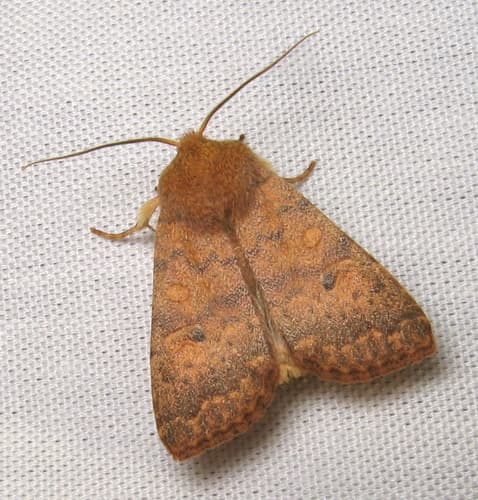
Bicolored Sallow
Common NameBicolored Sallow
Scientific NameEupsilia bicolorago
FamilyNoctuidae
SubfamilyXyleninae
Wingspan (mm)35
Primary Colorsorange, brown, dark brown
HabitatDeciduous forests, woodlands, mixed forests, suburban areas
Geographic RangeEastern North America, from Nova Scotia south to Florida and west to Texas and Manitoba
Host Plantsoak, maple, birch, willow, cherry, elm
Flight PeriodAugust to November (overwinters as adult), March to April
Flight Stylefluttering
Conservation Statusleast-concern
Lifecycle NotesLarvae feed on deciduous tree leaves in spring and early summer. Pupation occurs in the soil. Adults emerge in late summer, overwinter, and mate/lay eggs in early spring.
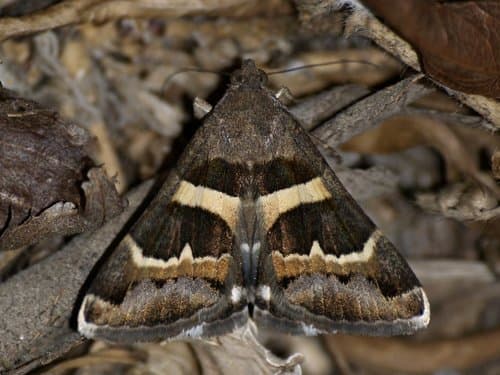
Identification TipsKey features include the overall orange-brown coloration, the two distinct dark-ringed spots (orbicular and reniform) on the forewing, and the wavy dark transverse lines. Its flight period, including overwintering as an adult, is also a strong identifier.
Description
A medium-sized moth with an orange-brown to reddish-brown body and forewings, marked with darker wavy transverse lines and distinct orbicular and reniform spots. The hindwings are typically paler.