Bisected Honey Locust Moth
Common NameBisected Honey Locust Moth
Scientific NameSphingicampa bisecta
FamilySaturniidae
SubfamilyCeratocampinae
Wingspan (mm)55
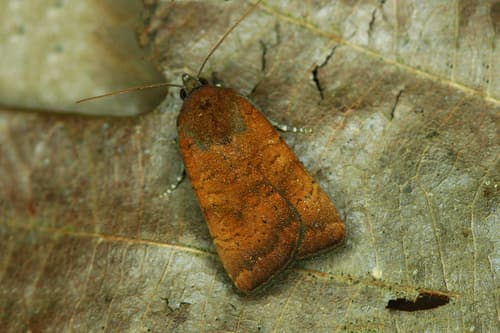
Primary Colorsorange, reddish-brown, black
HabitatDeciduous woodlands, forests, and areas with host trees
Geographic RangeEastern North America, from New York south to Florida, west to Texas and Kansas
Host Plantshoney locust, black locust, Kentucky coffeetree
Flight PeriodMay to September (often bivoltine)
Conservation Statusleast-concern
Lifecycle NotesEggs are laid on host plant leaves; larvae are green caterpillars with small spines, feeding on foliage; pupation occurs in the soil or leaf litter, with adults emerging later in the season or the following spring.
Identification TipsLook for the distinctive dark diagonal line across the orange-yellow forewings, which gives the moth its 'bisected' name. The reddish hindwings are also a key feature, often visible at rest or in flight.
Description
A medium-sized moth characterized by its orange-yellow forewings, each prominently bisected by a dark, diagonal line, and contrasting reddish-brown hindwings.