Black-spotted Labyrinth
Common NameBlack-spotted Labyrinth
Scientific NameMelanitis leda
FamilyNymphalidae
SubfamilySatyrinae
Wingspan (mm)75
Primary Colorsbrown, grey, black, white
HabitatForest edges, open woodlands, grasslands, often near water and shaded areas
Geographic RangeTropical and subtropical Asia, Africa, and Australia
Host Plantsgrasses (Poaceae), rice, sugarcane, bamboo, maize
Flight PeriodYear-round in tropical regions (multiple generations)
Flight Stylegliding
Conservation Statusleast-concern
Lifecycle NotesEggs are laid singly on various host grasses. Larvae are green with horn-like projections on the head and a forked tail, while pupae are green or brown, camouflaged as leaves or twigs. Adults display seasonal dimorphism, with wet-season forms having more distinct eyespots and dry-season forms being more cryptic.
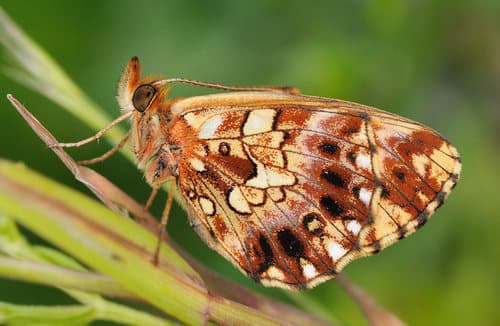
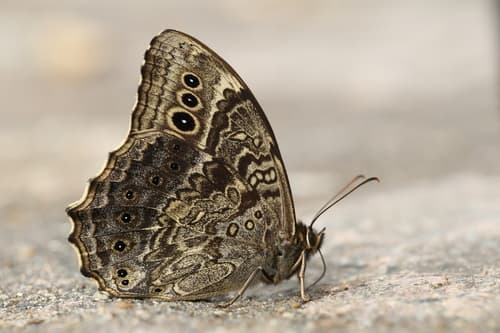
Identification TipsLook for the distinctive cryptic underside pattern that mimics a dried leaf, especially the intricate 'labyrinthine' markings. The three prominent, white-ringed black eyespots on the forewing underside are key features for identification. They are often found resting with wings closed, blending perfectly with leaf litter.
Description
This medium-sized butterfly exhibits a highly cryptic underside, mottled in shades of brown and grey, intricately patterned to resemble a dried leaf. It is characterized by three prominent black eyespots ringed with white on the forewing, and a series of smaller, less distinct eyespots on the hindwing.