Black Swallowtail
Common NameBlack Swallowtail
Scientific NamePapilio polyxenes
FamilyPapilionidae
SubfamilyPapilioninae
Wingspan (mm)90
Wing Patternspotted
Primary Colorsblack, yellow, blue, orange
HabitatMeadows, fields, gardens, open woodlands, roadsides
Geographic RangeNorth America, from southern Canada through the eastern and central United States to northern Mexico
Host Plantswild carrot (Daucus carota), parsley (Petroselinum crispum), dill (Anethum graveolens), fennel (Foeniculum vulgare), celery (Apium graveolens)
Flight PeriodMarch to November (multiple broods, varies by region)
Flight Stylegliding
Conservation Statusleast-concern
Lifecycle NotesEggs are laid singly on host plants. Larvae are initially spiny and black, later becoming smooth, green, and striped with black bands and yellow spots. They pupate into a chrysalis that can be green or brown, mimicking a twig or leaf.
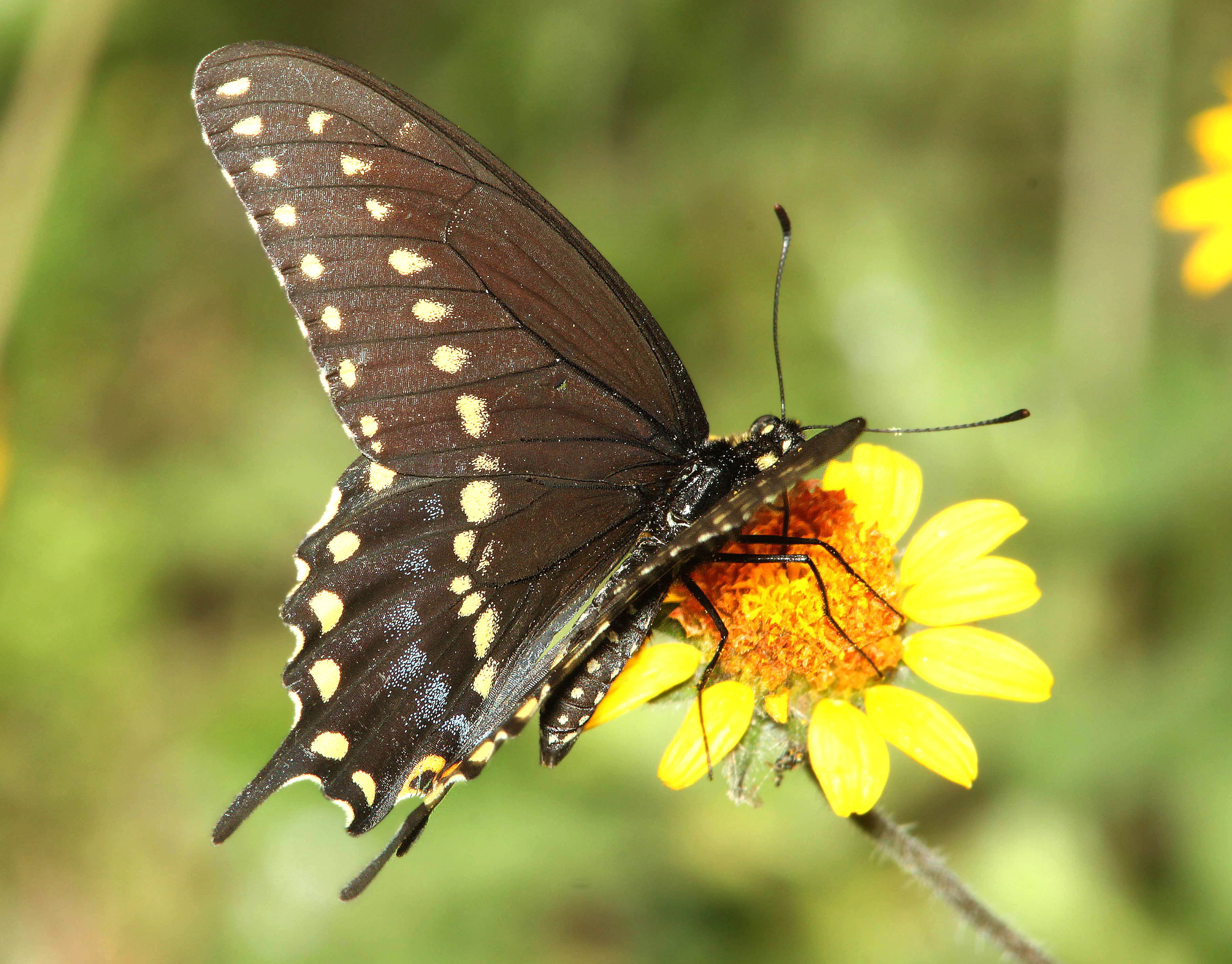
Identification TipsLook for the distinctive black and yellow pattern, especially the two rows of yellow spots. The single prominent orange eyespot with a black center on the hindwing is a key feature. Often seen nectaring in gardens and open fields.
Description
A medium-sized black butterfly with two rows of yellow spots on its forewings and hindwings, and a prominent orange eyespot with a black center on each hindwing. Females typically have more blue iridescence on their hindwings than males.