Blue-topped Satyr
Common NameBlue-topped Satyr
Scientific NameHermeuptychia hermes
FamilyNymphalidae
SubfamilySatyrinae
Wingspan (mm)30
Primary Colorsbrown, tan, grey, black, orange, blue
HabitatForest understory, open woodlands, clearings, and grassy edges
Geographic RangeSoutheastern United States, Mexico, Central America, and South America
Host Plantsvarious grasses (Poaceae)
Flight PeriodMultiple broods from spring to fall in temperate regions, year-round in tropical areas
Flight Stylefluttering
Conservation Statusleast-concern
Lifecycle NotesEggs are laid singly on host grasses. The larvae are green with faint longitudinal stripes and feed on various grasses. Pupation occurs as a chrysalis, typically green or brown, suspended head-down.
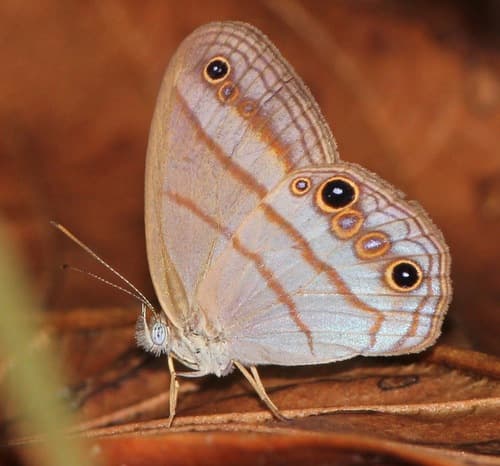
Identification TipsLook for the dull underside coloration with wavy lines and the distinctive pattern of eyespots on the hindwing, which often have a bluish iridescence. It can be distinguished from similar *Hermeuptychia* species by the specific number and arrangement of eyespots and the intensity of the blue sheen.
Description
This small to medium-sized satyrine butterfly has dull grayish-brown to tan undersides, marked with several wavy brown lines. Its hindwings feature a row of prominent black eyespots, each ringed with orange and often displaying a subtle iridescent blue sheen.