Cape Ivy Moth
Common NameCape Ivy Moth
Scientific NamePhycita clientella
FamilyPyralidae
SubfamilyPhycitinae
Wingspan (mm)22
Wing Patterncryptic
Primary Colorsgrey, brown, dark brown
HabitatCoastal areas, disturbed sites, gardens, urban environments where Cape Ivy grows
Geographic RangeNative to South Africa; introduced to California (USA), Australia, and New Zealand
Host PlantsDelairea odorata (Cape Ivy)
Flight PeriodYear-round in warmer climates; multiple generations from spring to autumn in temperate regions
Flight Stylefluttering
Conservation Statusleast-concern
Lifecycle NotesLarvae feed on the leaves and stems of Cape Ivy, initially as leaf-miners and later externally. Pupation occurs in a silken cocoon, often on the host plant. It is multivoltine, completing several generations per year.
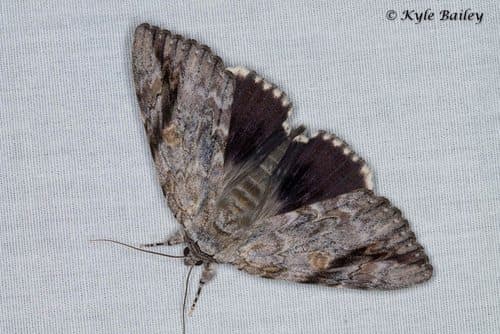
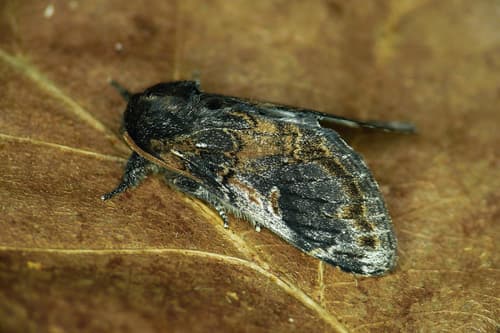
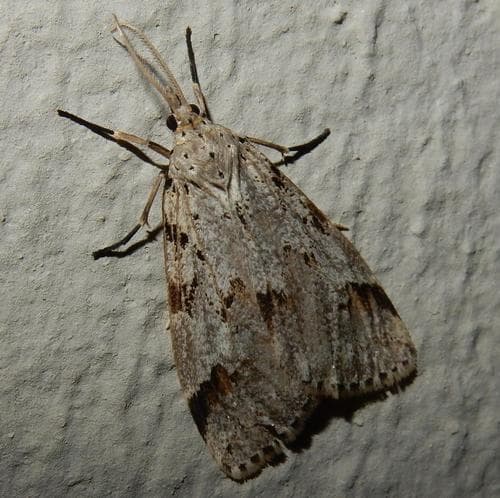
Identification TipsLook for the distinctive mottled grey-brown forewings with a broad, dark brown subterminal band. Its presence in areas infested with Cape Ivy is a strong indicator.
Description
A small to medium-sized moth with mottled grey and brown forewings, featuring indistinct darker spots and a prominent dark brown band near the outer margin. Its body is slender, and antennae are relatively long.