Cecropia Moth
Common NameCecropia Moth
Scientific NameHyalophora cecropia
FamilySaturniidae
SubfamilySaturniinae
Wingspan (mm)150
Primary Colorsbrown, red, white, black, tan
HabitatDeciduous forests, woodlands, suburban areas, orchards, swamps
Geographic RangeEastern North America, from Nova Scotia west to Manitoba and south to Florida and Texas
Host Plantsmaple, birch, cherry, apple, willow, lilac, box elder, sassafras, elm, plum
Flight PeriodMay to July
Conservation Statusleast-concern
Lifecycle NotesEggs are laid on host plants, hatching into large green caterpillars with colorful tubercles. Caterpillars feed and grow, then spin a large silken cocoon to pupate over winter. Adults emerge in spring/early summer, do not feed, and live only for about two weeks to reproduce.
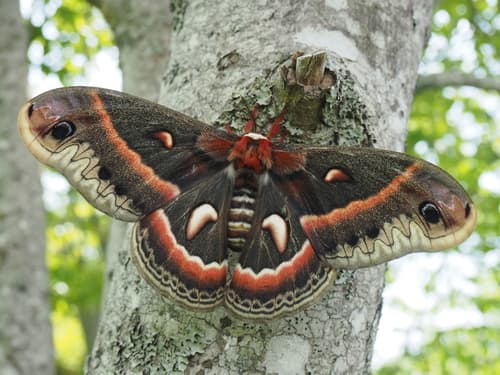
Identification TipsLook for its immense size (largest moth in North America), the distinctive reddish-brown wings with large white, red, and black crescent-shaped spots, and the prominent reddish-orange and white bands. The furry, reddish body is also characteristic.
Description
The Cecropia Moth is a large, striking moth with a robust, furry body and broad wings. Its wings are predominantly dark brown to reddish-brown, adorned with prominent white, red, and black crescent-shaped spots and distinct reddish-orange and white bands bordered by black.