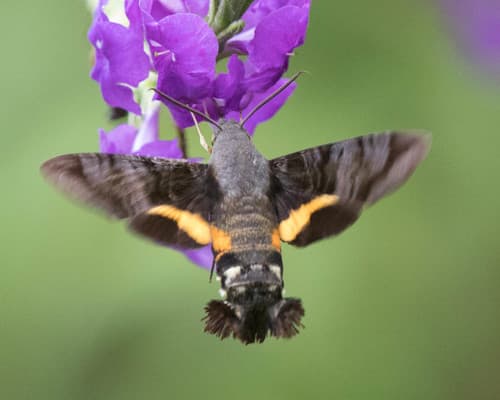
Ceculus Sphinx
Common NameCeculus Sphinx
Scientific NameAellopos ceculus
FamilySphingidae
SubfamilyMacroglossinae
Wingspan (mm)50
Primary Colorsdark grey, black, orange
HabitatTropical and subtropical open woodlands, forest edges, gardens
Geographic RangeSouthern United States, Mexico, Central America, South America
Host PlantsPsychotria spp.
Flight PeriodYear-round in tropical areas; March to November in temperate parts of its range
Conservation Statusleast-concern
Lifecycle NotesUndergoes complete metamorphosis: egg, larva (caterpillar), pupa, and adult. Larvae typically feed on plants in the Rubiaceae family before pupating.
Identification TipsKey features include the dark body and wings with a distinct orange band on the hindwings, and brush-like tufts at the end of the abdomen. Its hummingbird-like hovering flight is also characteristic.
Description
A robust, medium-sized hawk-moth with a dark grey body and dark wings, distinguished by a prominent orange band across its hindwings.