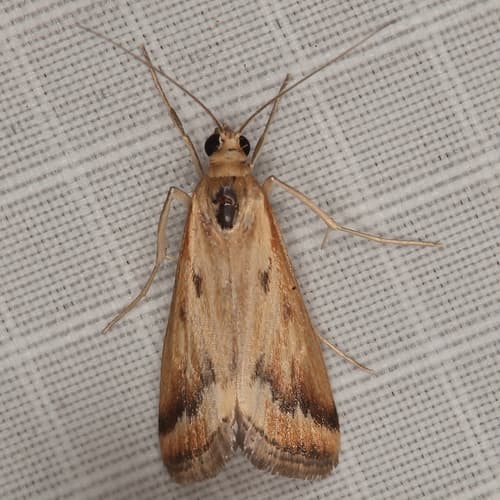
Celery Leaftier
Common NameCelery Leaftier
Scientific NameUdea rubigalis
FamilyCrambidae
SubfamilySpilomelinae
Wingspan (mm)18
Primary Colorsbrown, tan, dark brown
HabitatGardens, agricultural fields, greenhouses, disturbed areas, open woodlands
Geographic RangeNearly cosmopolitan (North America, Europe, Asia, Australia, etc.)
Host Plantscelery, beet, cabbage, lettuce, beans, chrysanthemum, geranium, various weeds
Flight PeriodMultiple generations, year-round in warm climates/greenhouses; spring to fall in temperate regions
Flight Stylefluttering
Conservation Statusleast-concern
Lifecycle NotesLarvae are pale green with a dark head, often tying leaves together with silk. Pupation occurs in a silken cocoon within tied leaves or in the soil. Multiple generations occur annually.
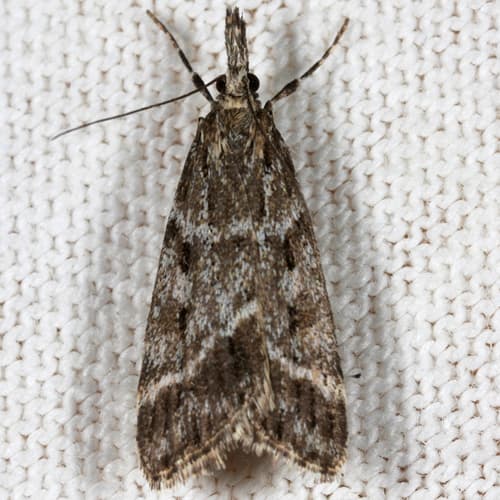
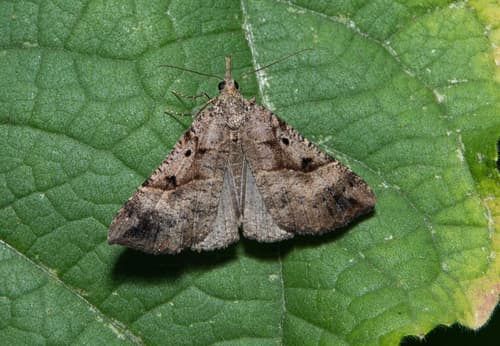
Identification TipsLook for the two distinct dark spots on the forewing and the wavy dark subterminal line. Its small size and overall brown coloration are characteristic, often found in gardens and agricultural settings.
Description
A small, light to dark brown moth with a wingspan of 15-22 mm. Its forewings feature two prominent dark spots and a wavy, darker brown subterminal line, while hindwings are typically paler.