Ceraunus Blue
Common NameCeraunus Blue
Scientific NameHemiargus ceraunus
FamilyLycaenidae
SubfamilyPolyommatinae
Wingspan (mm)26
Primary Colorspale gray, brown, black, orange
HabitatOpen, sunny areas such as fields, meadows, roadsides, desert washes, and coastal dunes.
Geographic RangeSouthern United States (from Florida to California, north to Kansas and Maryland), Mexico, Central America, Caribbean, and South America.
Host PlantsAstragalus, Indigofera, Lotus, Medicago, Melilotus, Prosopis, Trifolium, Vicia
Flight PeriodMultiple broods year-round in warmer regions; typically March to November in more temperate areas.
Conservation Statusleast-concern
Lifecycle NotesEggs are laid singly on the flowers or leaves of host plants. Larvae feed on flowers and developing seeds, often tended by ants. Pupation occurs on or near the host plant.
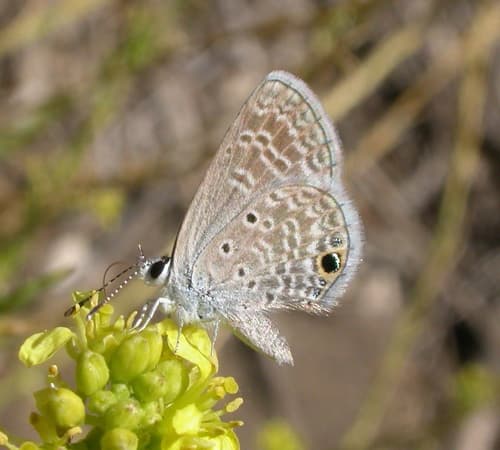
Identification TipsLook for its small size, the pale gray-brown underside with distinct black spots, and the characteristic black spot with an orange ring on the hindwing near the tornus. A tiny, often inconspicuous, tail may be present on the hindwing.
Description
A small butterfly with a pale gray-brown underside, featuring a pattern of small black spots and a prominent black eyespot ringed with orange on the hindwing. Males typically have iridescent blue uppersides, while females are duller blue or brown.