Clavipes Sphinx
Common NameClavipes Sphinx
Scientific NameMacroglossum stellatarum
FamilySphingidae
SubfamilyMacroglossinae
Wingspan (mm)40
Primary Colorsdark brown, grey, white
HabitatGardens, meadows, parks, forest edges, coastal areas
Geographic RangeEurope, North Africa, Asia (Palearctic region), migratory to northern areas
Host PlantsGalium verum, Galium mollugo, Rubia peregrina
Flight PeriodMarch to October (multiple broods)
Flight Stylehovering
Conservation Statusleast-concern
Lifecycle NotesEggs are laid on host plants. Larvae are typically green with yellow stripes and a blue horn at the rear. Pupation occurs in a cocoon on the ground or in leaf litter. Multiple generations per year.
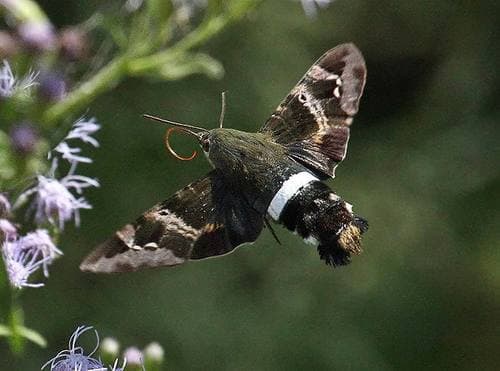
Identification TipsDistinguished by its hummingbird-like hovering flight, stout body, long proboscis, and the combination of dark forewings, orange hindwings (often visible in flight), and a distinct white band on the abdomen.
Description
A medium-sized hawk-moth with a stout, furry dark body, a prominent white band on the abdomen, and dark brown forewings with subtle patterns. It has a very long, coiled proboscis.