Clay Monkey
Common NameClay Monkey
Scientific NameLasiocampa sp.
FamilyLasiocampidae
SubfamilyLasiocampinae
Wingspan (mm)50
Primary Colorsbrown
HabitatForests, woodlands, shrublands, gardens
Geographic RangeHolarctic (Europe, Asia, North America, depending on species)
Host Plantsoak, willow, fruit trees, various deciduous trees and shrubs
Flight PeriodJune to August
Conservation Statusleast-concern
Lifecycle NotesCaterpillars are typically hairy and may be gregarious, sometimes forming silken tents. Pupation occurs in a tough, silken cocoon often attached to host plants or leaf litter.
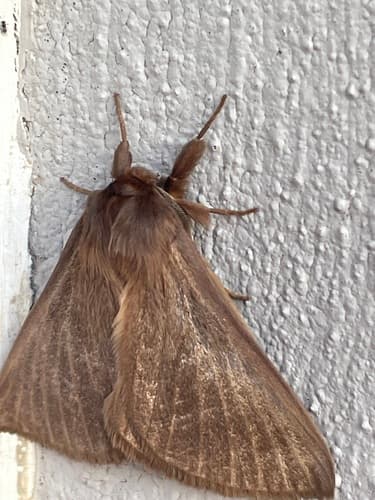
Identification TipsKey features include the moth's exceptionally furry body, uniform brown wings with subtle longitudinal lines, and often feathery antennae in males. It rests with wings held in a tent-like fashion.
Description
A robust, medium-sized moth characterized by its very hairy, warm brown body and wings. The forewings display a uniform brown coloration with faint, slightly wavy longitudinal striations.