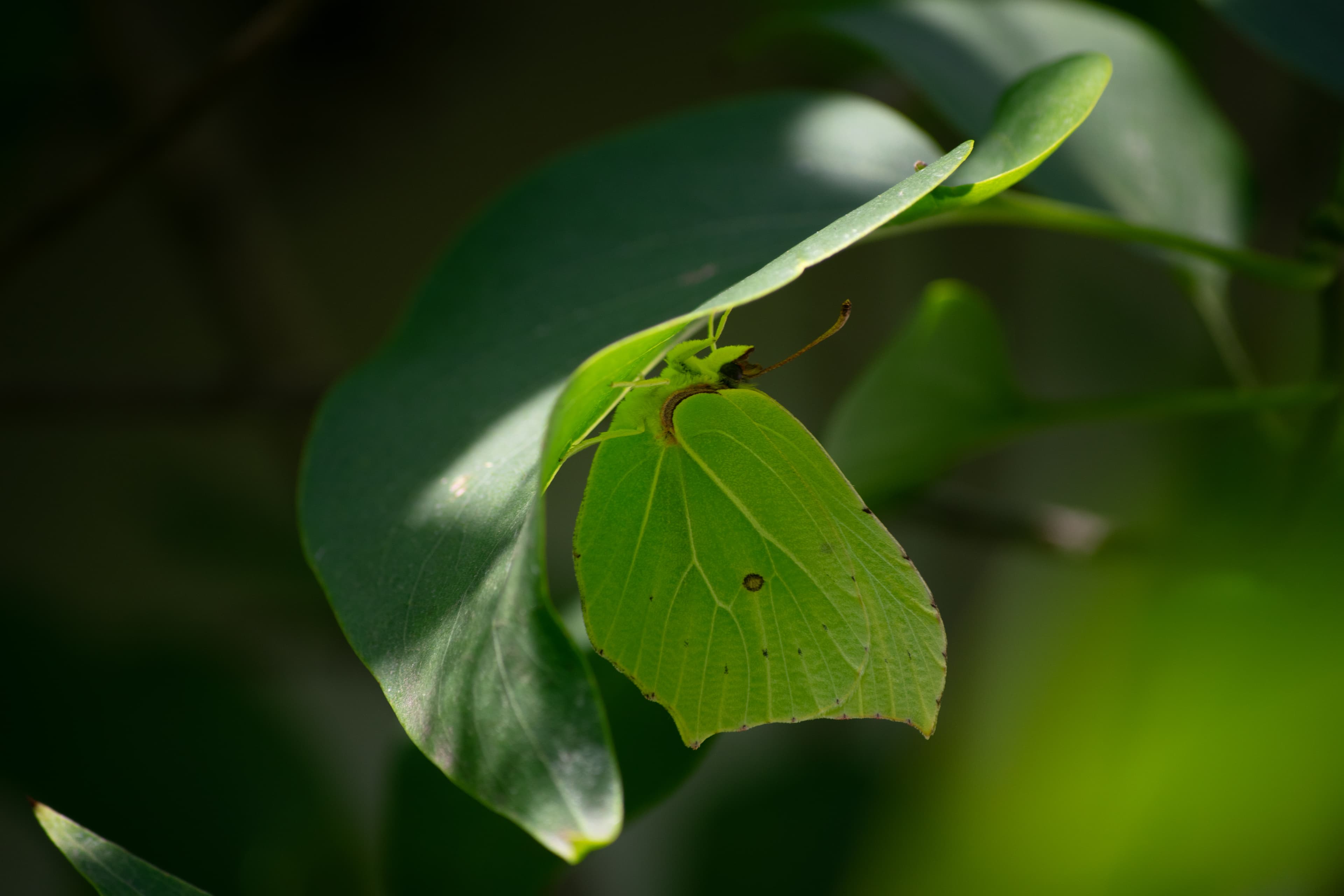
Cleopatra Butterfly
Common NameCleopatra Butterfly
Scientific NameGonepteryx cleopatra
FamilyPieridae
SubfamilyColiadinae
Wingspan (mm)50
Wing Patternsolid
Primary Colorsyellow, orange, green
HabitatOpen woodlands, scrubland, maquis, forest edges, gardens
Geographic RangeSouthern Europe, North Africa, Middle East
Host PlantsRhamnus alaternus, Rhamnus cathartica, Rhamnus lycioides
Flight PeriodMarch to October (overwintering as adults)
Flight Stylegliding
Conservation Statusleast-concern
Lifecycle NotesThis species overwinters as an adult butterfly. Eggs are laid on the host plant, and the larvae feed on the leaves before pupating. There are typically one or two generations per year.
Identification TipsLook for the distinctive pointed wings and the bright orange forewing patch on males. The cryptic greenish-yellow underside with a small white spot is characteristic when the butterfly is at rest with closed wings.
Description
Males are bright lemon-yellow with a prominent orange patch on the forewing tips, while females are paler yellow. The underside, visible when at rest, is a cryptic greenish-yellow with a small white spot on each hindwing.