Columbine Borer Moth
Common NameColumbine Borer Moth
Scientific NamePapaipema leucostigma
FamilyNoctuidae
SubfamilyNoctuinae
Wingspan (mm)30
Primary Colorsorange, brown, purplish-brown, white
HabitatWoodlands, forest edges, and meadows where host plants are abundant
Geographic RangeEastern North America, from Nova Scotia south to Florida, and west to Manitoba and Texas
Host Plantscolumbine (*Aquilegia*), meadow-rue (*Thalictrum*), baneberry (*Actaea*), bugbane (*Cimicifuga*)
Flight PeriodAugust to October
Flight Stylefluttering
Conservation Statusleast-concern
Lifecycle NotesEggs overwinter, hatching in spring. Larvae bore into the stems and roots of host plants, pupating in the soil before adults emerge in late summer.
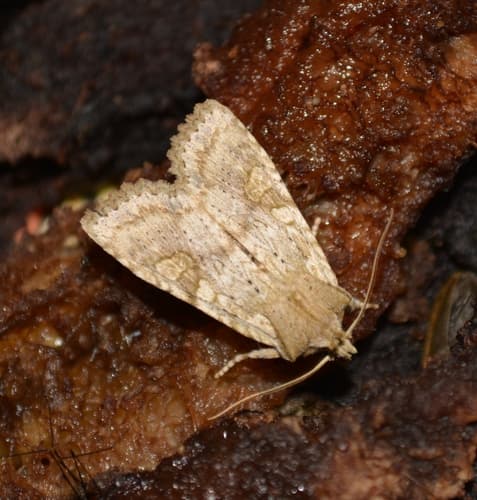
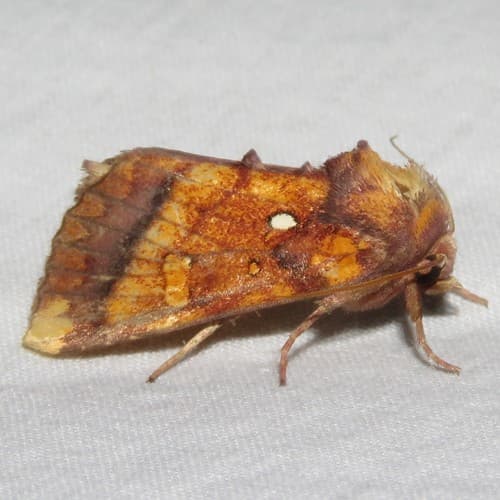
Identification TipsKey features include the mottled orange and brown forewings with a prominent, round white reniform spot. Its flight period in late summer and association with columbine plants are also strong indicators.
Description
This medium-sized moth has mottled forewings in shades of rusty orange, brown, and purplish-brown, prominently featuring a distinct white reniform spot. Its robust, hairy body and cryptic coloration help it blend into its environment.