Common Bagworm Moth
Common NameCommon Bagworm Moth
Scientific NameThyridopteryx ephemeraeformis
FamilyPsychidae
SubfamilyOiketicinae
Wingspan (mm)20
Primary Colorsdark brown, black
HabitatForests, woodlands, urban and suburban landscapes, often on ornamental trees and shrubs.
Geographic RangeEastern North America, from New England south to Florida and west to Nebraska and Texas.
Host Plantsarborvitae, juniper, cedar, pine, spruce, willow, maple, oak, sycamore, apple, rose
Flight PeriodLate summer to early fall (August to October) for adult males.
Conservation Statusleast-concern
Lifecycle NotesLarvae construct and carry a camouflaged bag made of silk and plant material, feeding on host plants. They pupate inside this bag, with males emerging as winged moths and females remaining as grub-like creatures within the bag, where they are fertilized and lay eggs.
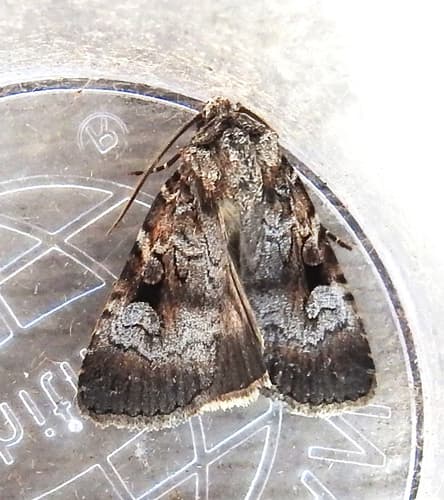
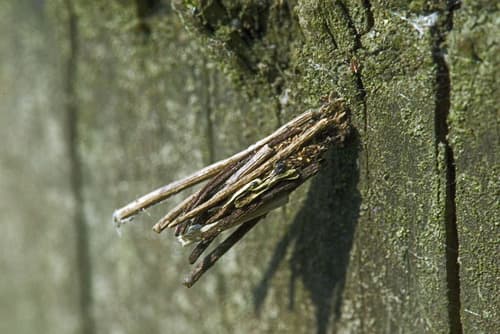
Identification TipsThe most distinctive feature is the larval case, a spindle-shaped bag covered with bits of leaves, twigs, or bark, which the larva carries as it feeds. Adult males are small, dark moths with clear wings, while females are never seen outside their bags.
Description
The adult male is a small, dark moth with translucent wings and feathery antennae, while the female is wingless, legless, and grub-like, remaining entirely within her silken bag. The image shows the larval stage, encased in a protective bag constructed from silk and plant debris, camouflaged against a wooden surface.