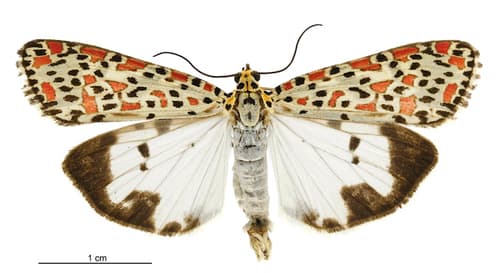
Crotalaria moth
Common NameCrotalaria moth
Scientific NameUtetheisa pulchella
FamilyErebidae
SubfamilyArctiinae
Wingspan (mm)35
Wing Patternspotted
Primary Colorswhite, black, orange
HabitatOpen grasslands, meadows, disturbed areas, gardens
Geographic RangeWidespread in the Old World tropics and subtropics (Africa, Asia, Australia, southern Europe), often migrating to temperate regions.
Host PlantsCrotalaria spp., Heliotropium spp.
Flight PeriodYear-round in tropical regions; multiple broods in temperate areas where it migrates.
Flight Stylefluttering
Conservation Statusleast-concern
Lifecycle NotesLarvae are hairy, typically black with yellow stripes and red spots, feeding on host plants and sequestering pyrrolizidine alkaloids for defense. They pupate in a loose cocoon.
Identification TipsDistinguished by its unique forewing pattern of white, black spots, and orange-red patches, combined with white hindwings featuring a broad dark terminal band.
Description
A medium-sized moth with white forewings intricately patterned with numerous small black spots and irregular orange-red patches; the hindwings are white with a prominent dark brown to black band along the outer margin.