Dark Tussock
Common NameDark Tussock
Scientific NamePhalera bucephala
FamilyNotodontidae
SubfamilyPhalerinae
Wingspan (mm)60
Primary Colorsgrey, black, orange, brown
HabitatDeciduous woodlands, parks, gardens, hedgerows, scrubland
Geographic RangeEurope, North Africa, temperate Asia
Host Plantsoak, birch, willow, hazel, lime, elm, sallow, poplar
Flight PeriodMay to July
Conservation Statusleast-concern
Lifecycle NotesEggs are laid in batches on host plant leaves. Larvae are gregarious, brightly colored with yellow and black stripes, and have an orange head. They pupate in the soil or leaf litter.
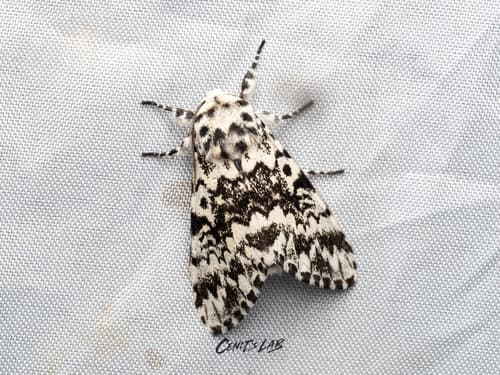
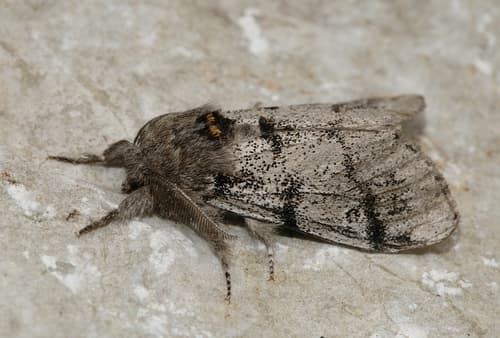
Identification TipsKey features include the large size, the grey and black speckled forewings with two dark bands, and the prominent 'tussock' of orange-brown hairs on the thorax. Its resting posture often mimics a broken twig.
Description
This moth has a robust, hairy body and grey forewings heavily speckled with black. Two broad, irregular black bands cross the forewings, and a distinctive orange-brown patch is visible on the dorsal thorax.