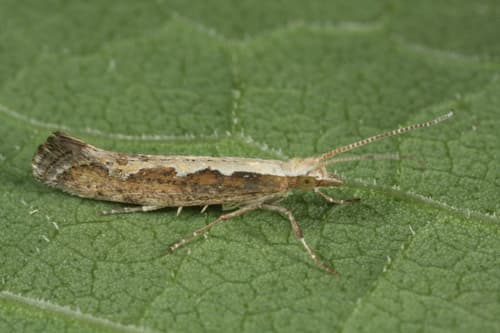
Diamondback Moth
Common NameDiamondback Moth
Scientific NamePlutella xylostella
FamilyPlutellidae
SubfamilyPlutellinae
Wingspan (mm)12
Wing Patterncryptic
Primary Colorsbrown, grey, cream
HabitatAgricultural fields, gardens, disturbed areas with host plants
Geographic RangeCosmopolitan (worldwide)
Host Plantscabbage, broccoli, cauliflower, kale, mustard, radish, turnip
Flight PeriodMultiple generations, continuous throughout growing season
Flight Stylefluttering
Conservation Statusleast-concern
Lifecycle NotesEggs are laid on host plant leaves, hatching into small green larvae that feed on foliage. Pupation occurs in a loose silken cocoon on the plant. Multiple generations occur annually.
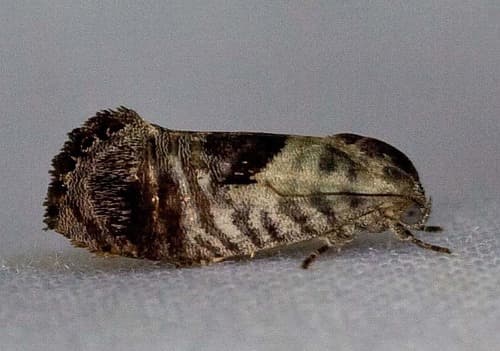
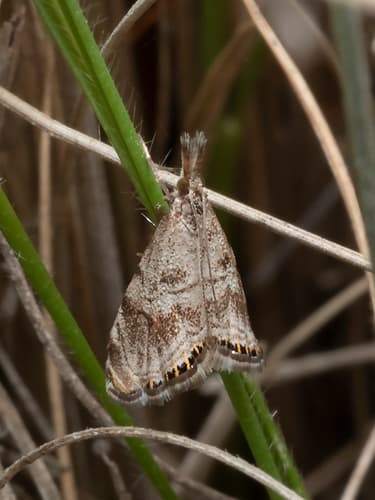
Identification TipsKey features include its small size, slender body, and the characteristic diamond pattern formed by the cream markings on the folded wings. Larvae are small, green, and wriggle vigorously when disturbed.
Description
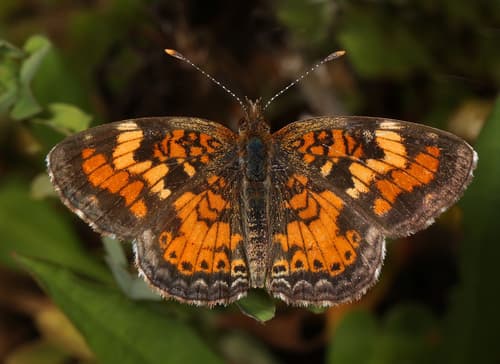
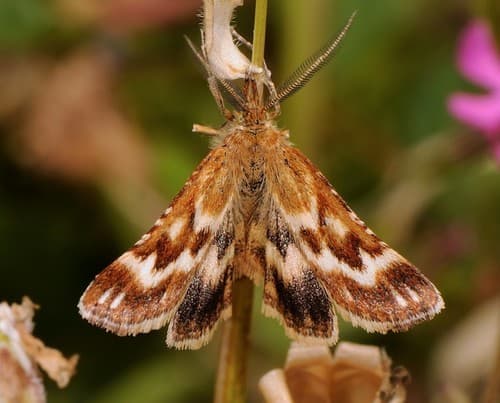
A small, slender moth with mottled brown and grey forewings. When at rest, a distinctive cream-colored wavy band along the dorsal margin forms a diamond shape on its back.