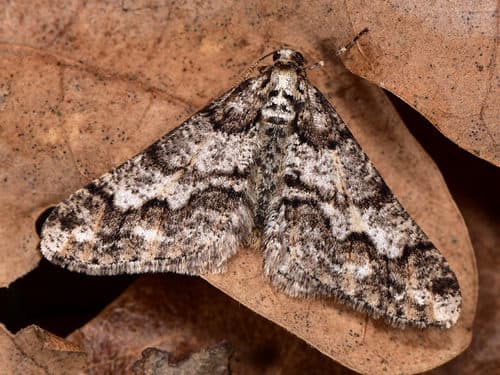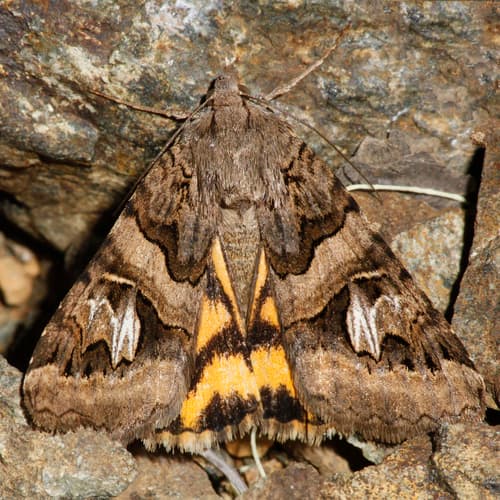
Divergent Drasteria
Common NameDivergent Drasteria
Scientific NameDrasteria divergens
FamilyErebidae
SubfamilyErebinae
Wingspan (mm)32
Primary Colorsbrown, grey, orange, black, white
HabitatArid and semi-arid regions, open woodlands, sagebrush steppe
Geographic RangeWestern North America (British Columbia south to California, east to Montana, Wyoming, Colorado, Utah, Nevada, Arizona, New Mexico)
Host PlantsLupinus, Astragalus, Thermopsis
Flight PeriodApril to August
Flight Styledarting
Conservation Statusleast-concern
Lifecycle NotesLarvae are typically semi-loopers, feeding on herbaceous plants, and pupate in the soil or leaf litter. Adults are primarily nocturnal.
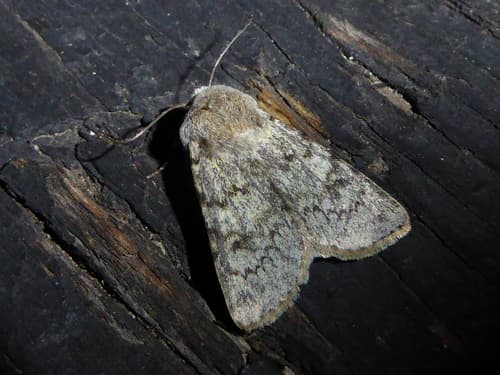
Identification TipsKey features include the mottled brown forewings with a prominent white kidney-shaped spot and the striking orange and black banded hindwings, which are often partially visible at rest.
Description
A medium-sized moth with cryptic brown and grey forewings featuring wavy dark lines and a distinct white reniform spot, contrasting sharply with bright orange hindwings banded with black.