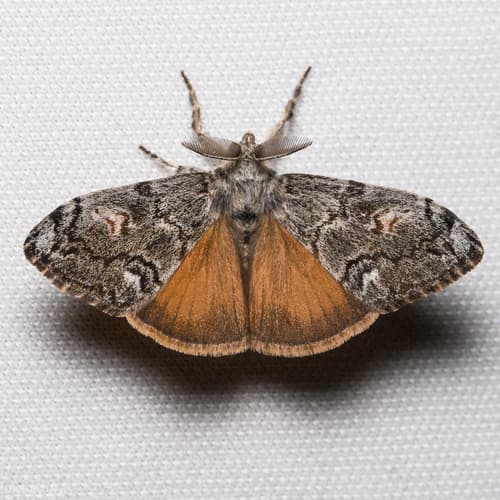
Douglas-fir tussock moth
Common NameDouglas-fir tussock moth
Scientific NameOrgyia pseudotsugata
FamilyErebidae
SubfamilyLymantriinae
Wingspan (mm)30
Wing Patterncryptic
Primary Colorsgrey, brown, orange, black
HabitatConiferous forests
Geographic RangeWestern North America
Host PlantsDouglas-fir, true firs, spruces, pines, larches
Flight PeriodJuly to September
Flight Stylefluttering
Conservation Statusleast-concern
Lifecycle NotesEggs are laid in a mass on the female's cocoon. Larvae are distinctive hairy caterpillars with prominent hair tufts (tussocks) that feed on conifer needles, leading to defoliation. Females are wingless and flightless, remaining on their cocoons after emergence.
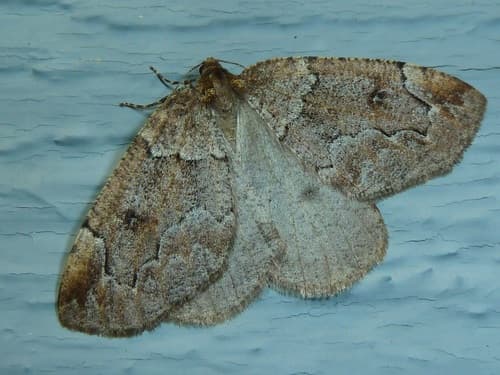
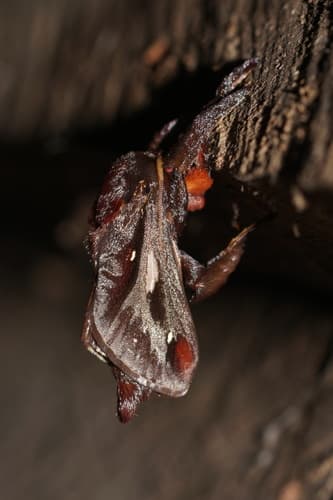
Identification TipsMales are identified by their mottled grey-brown forewings, orange-brown hindwings, and feathery antennae. The wingless, flightless female and the distinctive hairy larvae with their 'tussocks' are also key identifiers.
Description
The male Douglas-fir tussock moth has mottled grey-brown forewings with irregular darker markings and solid orange-brown hindwings, a fuzzy body, and prominent feathery antennae.