Duke of Burgundy
Common NameDuke of Burgundy
Scientific NameHamearis lucina
FamilyRiodinidae
SubfamilyRiodininae
Wingspan (mm)33
Wing Patternspotted
Primary Colorsorange, brown, black
HabitatOpen woodland, clearings, scrubland, chalk downland, limestone grassland
Geographic RangeWestern and Central Europe, extending east to Russia
Host PlantsPrimula veris, Primula vulgaris, Primula elatior
Flight PeriodLate April to early June
Flight Stylefluttering
Conservation Statusleast-concern
Lifecycle NotesEggs are laid singly on the underside of host plant leaves. Larvae are green and feed on primroses and cowslips. Pupation occurs at the base of the host plant or in leaf litter, with the pupa overwintering.
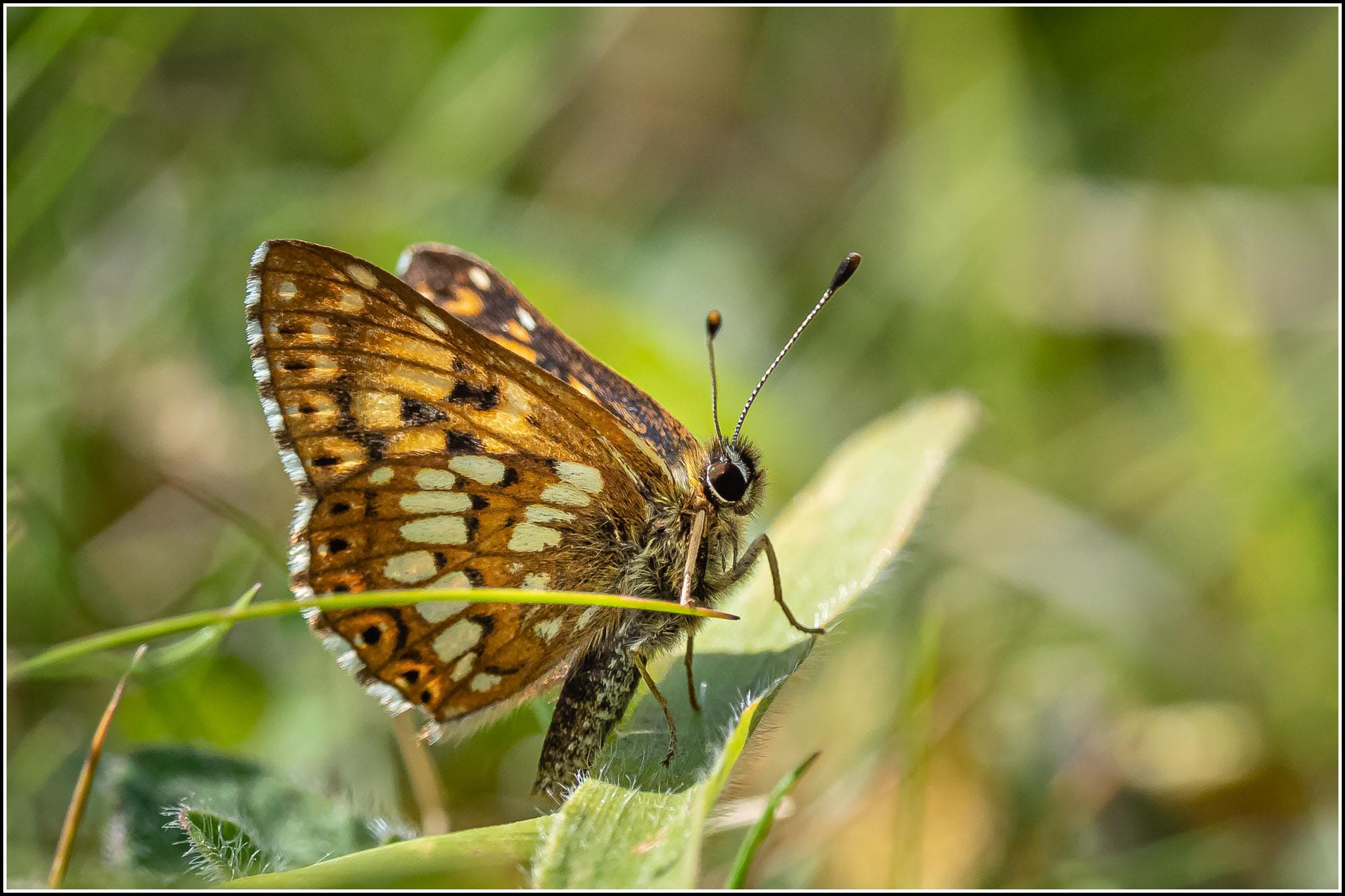
Identification TipsLook for its small size and unique checkered orange and dark brown wing pattern. It has a distinctive low, jerky flight close to the ground and often perches with its wings held flat.
Description
A small butterfly with a distinctive orange-brown ground color heavily marked with dark brown or black spots and bands, creating a checkered appearance. The underside of the hindwings features a striking pattern of orange, white, and black spots.