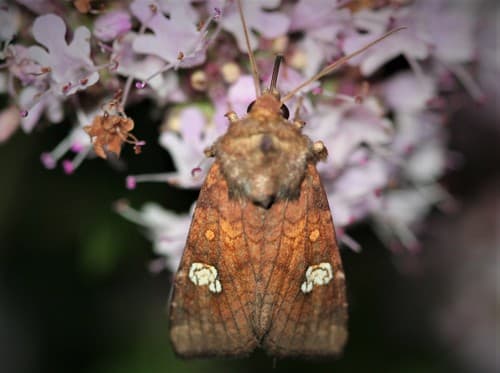
Ear Moth
Common NameEar Moth
Scientific NameAmphipoea oculea
FamilyNoctuidae
SubfamilyHadeninae
Wingspan (mm)31
Wing Patternspotted
Primary Colorsbrown, orange, white
HabitatGrasslands, meadows, fens, marshes, woodland edges, gardens
Geographic RangeEurope, parts of Asia
Host Plantsgrasses, Juncus, Rumex, Plantago
Flight PeriodJuly to September
Conservation Statusleast-concern
Lifecycle NotesUnivoltine. Eggs overwinter, larvae feed internally on roots and stems of various herbaceous plants and grasses, pupating underground.
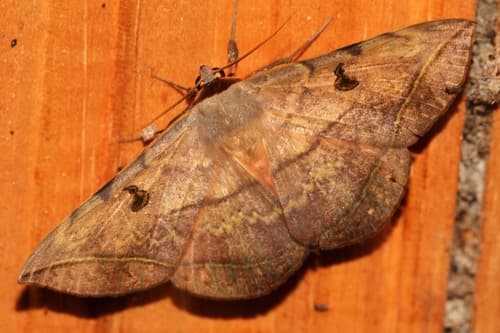
Identification TipsDistinguished by its reddish-brown forewings and the clear, pale kidney-shaped reniform stigma. Can be confused with other *Amphipoea* species, sometimes requiring genitalic examination for definitive identification.
Description
A medium-sized moth with reddish-brown to orange-brown forewings, characterized by a prominent pale, kidney-shaped reniform stigma and a smaller, pale orbicular stigma. The hindwings are plain greyish-brown.