Eastern Eggar
Common NameEastern Eggar
Scientific NameLasiocampa quercus
FamilyLasiocampidae
SubfamilyLasiocampinae
Wingspan (mm)75
Primary Colorsorange, brown
HabitatHeathland, moorland, open woodland, coastal areas, scrubland
Geographic RangeWidespread across Europe, including the British Isles, extending into parts of Asia.
Host Plantsheather, sallow, hawthorn, oak, birch, willow
Flight PeriodJune to August
Conservation Statusleast-concern
Lifecycle NotesThe larvae are very hairy and often seen basking in the sun; they overwinter as larvae. Pupation occurs in a tough, egg-shaped cocoon, giving the moth its common name.
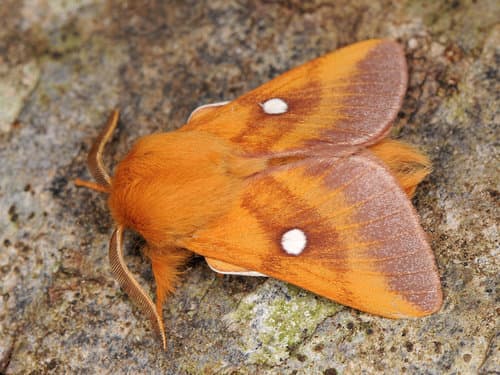
Identification TipsLook for its distinctive furry orange-brown appearance, the single white spot on each forewing, and the darker brown band towards the outer edge of the wings. Males have strongly feathered antennae.
Description
A robust, medium-sized moth with a furry orange-brown body and wings. The forewings feature a prominent white central spot and a darker brown subterminal band.