Elm Sphinx
Common NameElm Sphinx
Scientific NameCeratomia amyntor
FamilySphingidae
SubfamilySphinginae
Wingspan (mm)90
Wing Patterncryptic
Primary Colorsbrown, grey, black
HabitatDeciduous forests, woodlands, suburban areas, parks
Geographic RangeEastern North America, from southern Canada to Florida and west to Texas and the Great Plains
Host Plantselm, birch, basswood, cherry, ash
Flight PeriodMay to August
Conservation Statusleast-concern
Lifecycle NotesLarvae are large, green hornworms with a rough texture and a prominent horn at the rear, feeding on the leaves of various deciduous trees. They pupate in underground chambers.
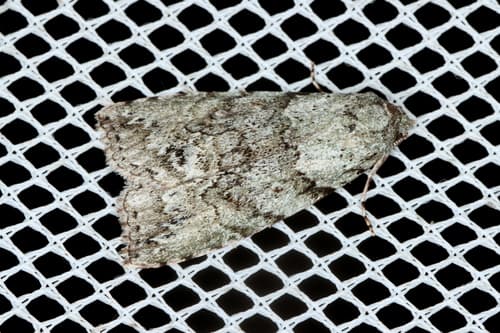
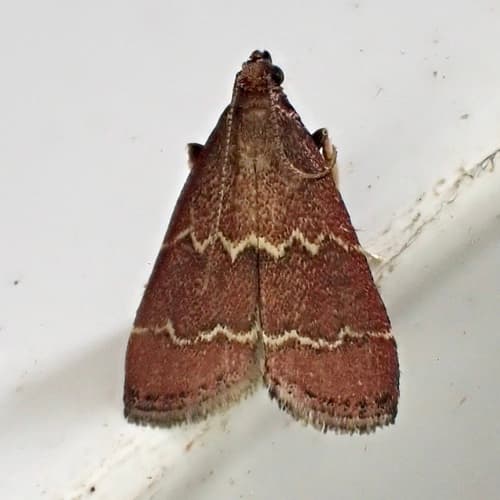
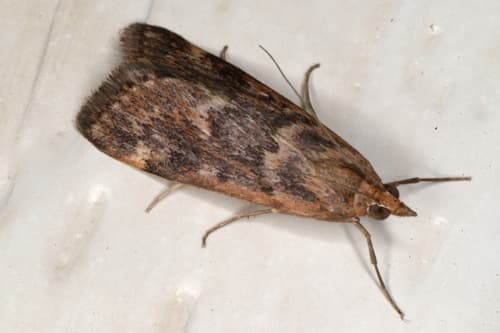
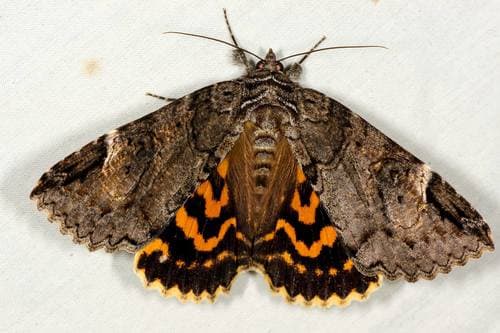
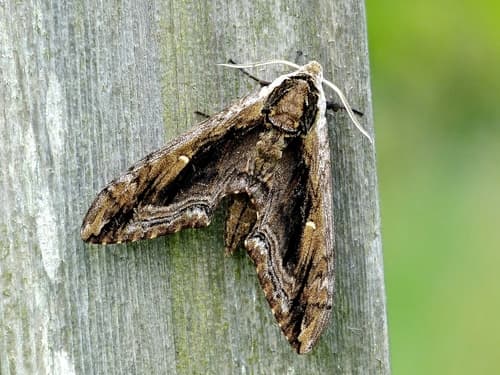
Identification TipsDistinguished by its large size, highly cryptic bark-like forewing pattern with a prominent dark median band, and the deeply scalloped outer margin of the forewings. The antennae are relatively thick and white.
Description
A large, robust moth with forewings cryptically patterned in mottled browns, greys, and blacks, featuring dark bands and wavy lines that mimic tree bark. Its body is stout, and it has prominent white antennae.