European Pepper Moth
Common NameEuropean Pepper Moth
Scientific NameDuponchelia fovealis
FamilyCrambidae
SubfamilySpilomelinae
Wingspan (mm)20
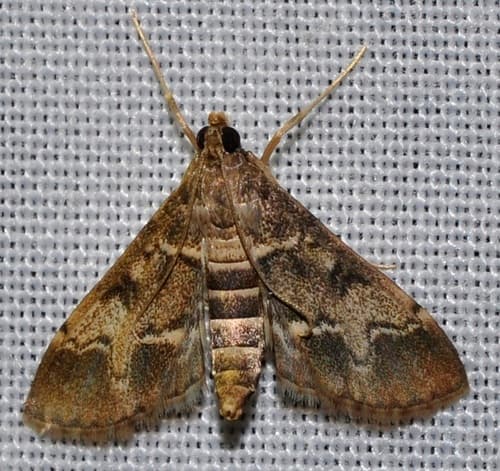
Primary Colorsbrown, tan, dark brown
HabitatGreenhouses, nurseries, gardens, cultivated fields
Geographic RangeNative to Southern Europe and North Africa, now widespread globally in temperate regions due to horticulture (e.g., North America, parts of Asia, other European countries)
Host Plantsbell pepper, cucumber, tomato, eggplant, lettuce, basil, cyclamen, begonia, geranium, poinsettia, rose
Flight PeriodYear-round in heated greenhouses; outdoors typically May to October in temperate regions
Flight Stylefluttering
Conservation Statusleast-concern
Lifecycle NotesEggs are laid singly or in small groups on plant undersides. Larvae are greenish with dark spots, feeding on leaves, stems, and roots, often near the soil line. Pupation occurs in a silken cocoon in soil or leaf litter, with multiple generations per year.
Identification TipsKey features include the characteristic dark, wavy lines on the forewings, a prominent discal spot, and a slender body with the abdomen often curved upwards when at rest. It is typically found in or near greenhouses.
Description
A small, slender moth with mottled brown and tan forewings featuring distinct dark, wavy transverse lines and a prominent dark discal spot. The abdomen is slender and often curves upwards at rest.