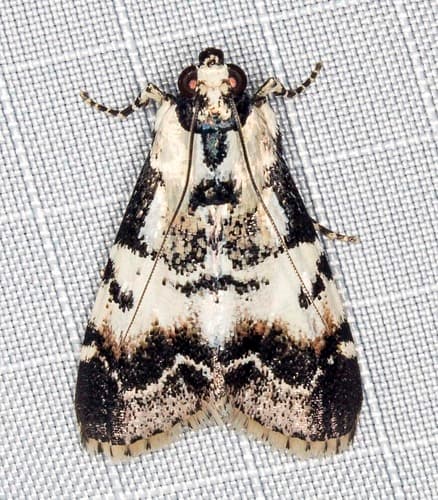
Fall Armyworm Moth
Common NameFall Armyworm Moth
Scientific NameSpodoptera frugiperda
FamilyNoctuidae
SubfamilyNoctuinae
Wingspan (mm)30
Wing Patterncryptic
Primary Colorsbrown, grey, black, white
HabitatAgricultural fields, grasslands, pastures, disturbed areas
Geographic RangeNative to the Americas, now widespread globally in tropical and subtropical regions
Host Plantscorn, rice, sorghum, millet, sugarcane, cotton, wheat, various grasses
Flight PeriodYear-round in tropical areas; migratory to temperate regions, active late summer to fall
Conservation Statusleast-concern
Lifecycle NotesUndergoes complete metamorphosis. Females lay masses of eggs, which hatch into larvae (armyworms) that are highly destructive agricultural pests. Larvae pupate in the soil, and adults emerge to mate, completing multiple generations per year.
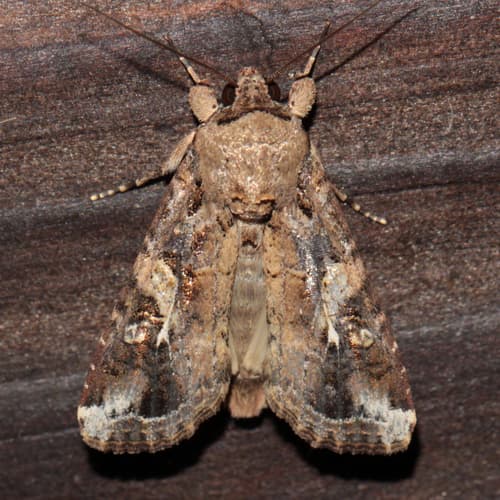
Identification TipsKey identification features on the forewing include a prominent white, oblique spot near the apex and a dark, kidney-shaped spot (reniform spot). Larvae are identified by an inverted 'Y' shape on their head capsule and four prominent spots forming a square on the second-to-last abdominal segment.
Description
A medium-sized moth with mottled brown and grey forewings, featuring complex patterns of darker spots and streaks, including a distinctive white, oblique spot near the wing tip. The hindwings are typically plain, pale, and iridescent.