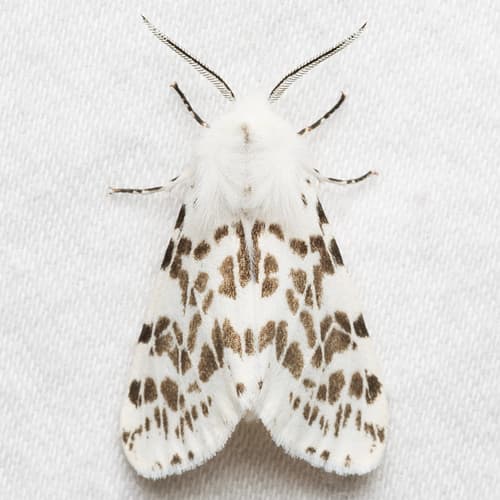
Fall Webworm Moth
Common NameFall Webworm Moth
Scientific NameHyphantria cunea
FamilyErebidae
SubfamilyArctiinae
Wingspan (mm)30
Wing Patternspotted
Primary Colorswhite, brown, black
HabitatDeciduous forests, orchards, urban areas, gardens
Geographic RangeNorth America, Central America, Europe, Asia
Host Plantsapple, cherry, pecan, walnut, elm, maple, oak, willow
Flight PeriodMay to September (two generations in many areas)
Flight Stylefluttering
Conservation Statusleast-concern
Lifecycle NotesLarvae are hairy caterpillars that construct large, conspicuous silken webs on the branches of host trees, feeding gregariously within the protective web. They pupate in cocoons in leaf litter or soil.
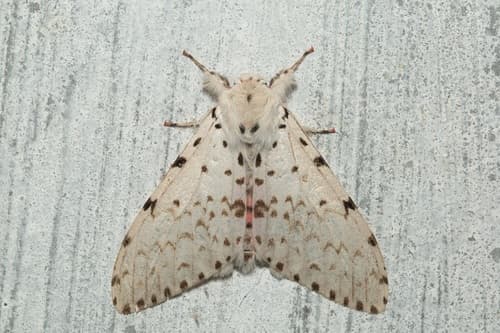
Identification TipsLook for a pure white or white moth with variable brown/black spotting on its wings. The most distinctive feature is the large, silken webs created by its larvae on tree branches during late summer and fall.
Description
A medium-sized moth with a fuzzy white body and white wings that are typically adorned with numerous small, irregular brown or black spots, though some forms are pure white.