Forest Giant Owl
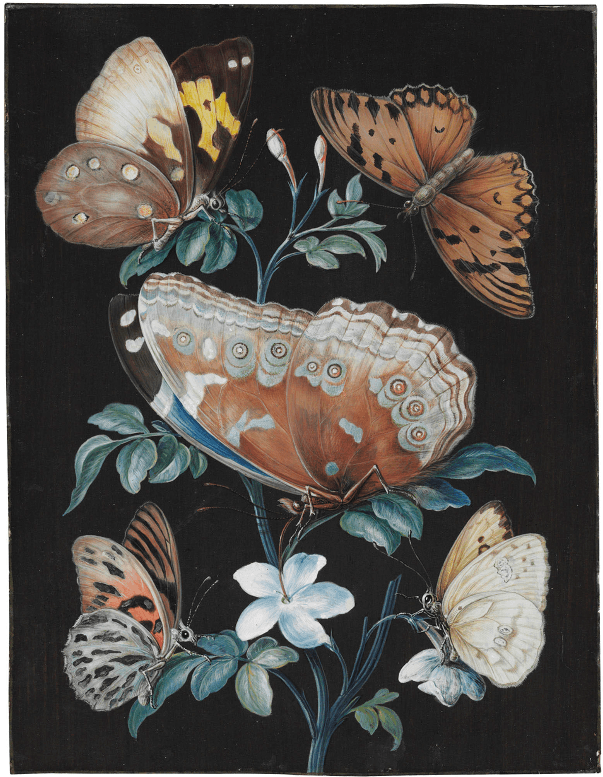
Image: German school (Public domain)
Common NameForest Giant Owl
Scientific NameCaligo eurilochus
FamilyNymphalidae
SubfamilyMorphinae
Wingspan (mm)130
Primary Colorsbrown, blue, white, black, orange
HabitatTropical rainforests, forest edges, secondary growth
Geographic RangeCentral and South America, from Mexico to southern Brazil
Host PlantsMusa acuminata (banana), Heliconia spp. (plantain), Saccharum officinarum (sugarcane), Calathea spp., Canna spp.
Flight PeriodYear-round
Conservation Statusleast-concern
Lifecycle NotesLarvae are large, often green or brown, with horn-like head capsules and a forked tail, feeding on monocot leaves. Pupae are short, stout, and camouflaged to resemble dead leaves or seed pods.
Identification TipsEasily identified by its immense size and the unmistakable large, concentric eyespots on the underside of the hindwings, which mimic an owl's eye to deter predators. The iridescent blue on the upperside is also distinctive.
Description
A very large butterfly, prominently featured in the center of the painting, characterized by its reddish-brown underside with striking, large owl-like eyespots on the hindwings and an iridescent blue band on the upperside of the forewings.