Forest giant owl
Common NameForest giant owl
Scientific NameCaligo eurilochus
FamilyNymphalidae
SubfamilyBrassolinae
Wingspan (mm)120
Primary Colorsbrown, grey, black, cream, yellow
HabitatTropical and subtropical forests, forest edges
Geographic RangeCentral America, South America (from Mexico to Brazil)
Host PlantsMusa, Heliconia, Calathea, Erythrina, Canna
Flight PeriodYear-round (in tropical regions), primarily crepuscular
Conservation Statusleast-concern
Lifecycle NotesLarvae are typically green or brown with horn-like projections on the head and a forked tail, feeding on monocotyledonous plants. Pupae are stout and often resemble dead leaves or bark.
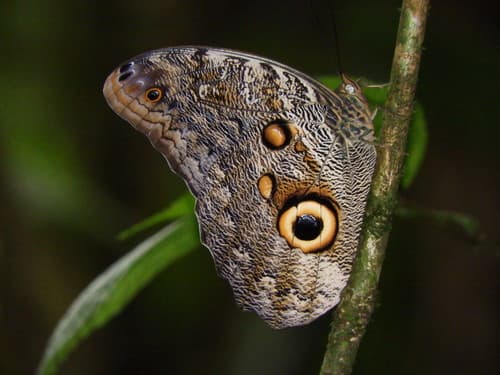
Identification TipsKey features for identification are its large size, the overall cryptic brown and grey coloration of the underside, and the distinctive large, concentric eyespots, particularly the prominent one on the hindwing that mimics an owl's eye.
Description
A large butterfly with a cryptic, bark-like pattern on its underside, featuring several prominent, owl-like eyespots, most notably a very large one on the hindwing.