Forked Grass-veneer
Common NameForked Grass-veneer
Scientific NameCrambus foradicellus
FamilyCrambidae
SubfamilyCrambinae
Wingspan (mm)22
Wing Patternstriped
Primary Colorsbrown, white, dark brown
HabitatGrasslands, meadows, open fields, lawns
Geographic RangeEastern and Central North America (southeastern Canada south to Florida and west to Texas and the Great Plains)
Host Plantsgrasses (Poaceae)
Flight PeriodJune to September
Conservation Statusleast-concern
Lifecycle NotesLarvae feed on the roots and stems of various grasses, often overwintering as partially grown larvae before pupating in a silken cocoon in the soil or thatch.
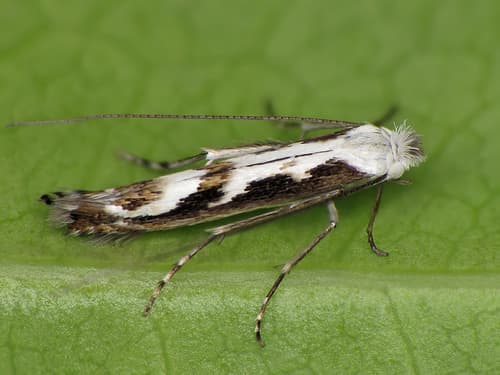
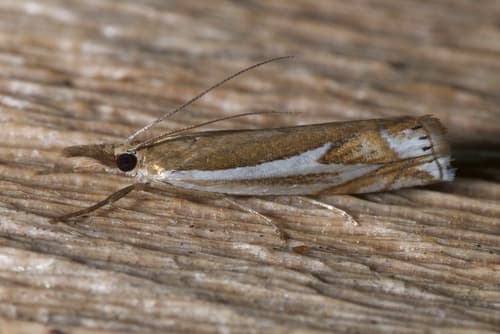
Identification TipsLook for the distinctive white stripe on the forewing that typically forks or branches near the outer margin, set against a mottled brown background. The long, porrect labial palps forming a 'snout' are also characteristic of grass-veneers.
Description
A small, slender moth with forewings primarily brown, featuring a prominent, often forked or Y-shaped white stripe running longitudinally, bordered by darker brown or black markings.