Fringed Tussock
Common NameFringed Tussock
Scientific NameOrgyia detrita
FamilyErebidae
SubfamilyLymantriinae
Wingspan (mm)20
Wing Patternsolid
Primary Colorsbrown, tan, yellow
HabitatForests, woodlands, suburban areas
Geographic RangeSoutheastern United States
Host Plantsoak, hickory, maple, sweetgum
Flight PeriodMarch to November
Flight Stylefluttering
Conservation Statusleast-concern
Lifecycle NotesFemales are flightless and sac-like, remaining on their cocoons to lay eggs. Larvae are distinctive hairy caterpillars, often with tufts of hair and prominent 'tussocks', feeding on various hardwood leaves before pupating in a silken cocoon.
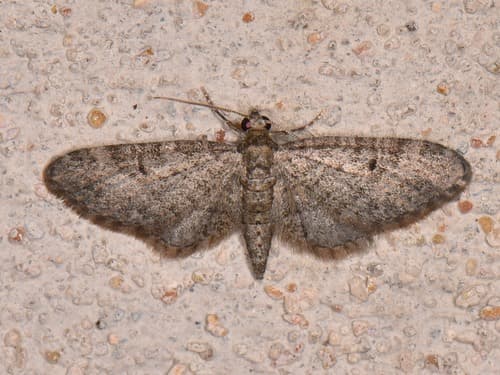
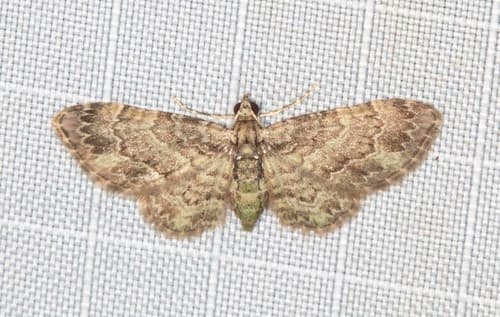
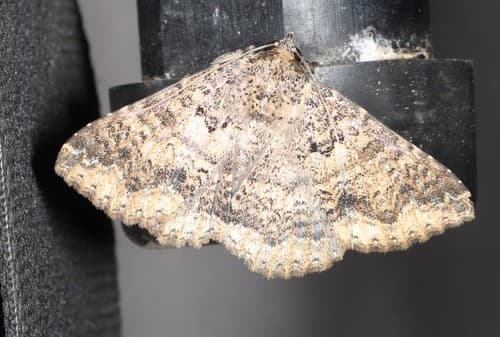
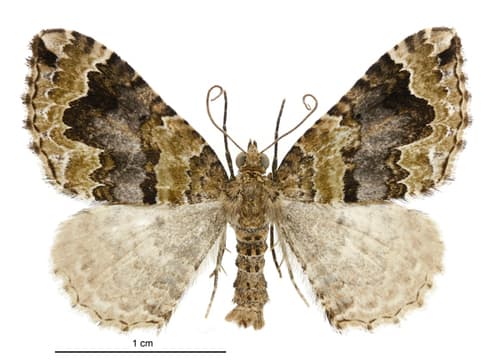
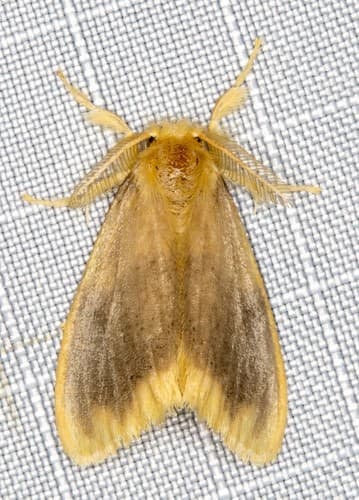
Identification TipsMales are identified by their feathery antennae, brown forewings with a darker median band and yellowish fringe, and lighter hindwings. The flightless, wingless female is also a key identifier for the species.
Description
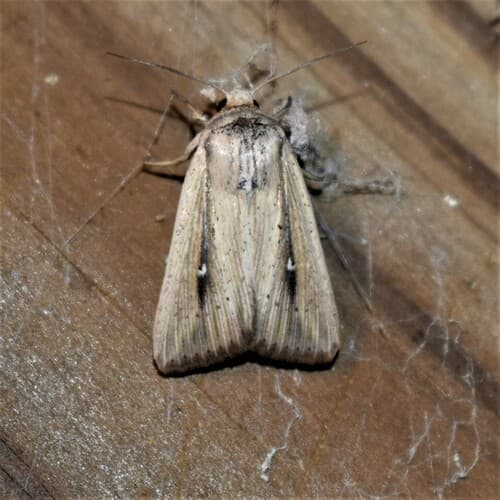
The male Fringed Tussock moth is small and fuzzy, with brown forewings that have a darker central band and a lighter, often yellowish fringe. Its hindwings are typically lighter brown or tan, and it possesses prominent, feathery antennae.