Glacial Apollo
Common NameGlacial Apollo
Scientific NameParnassius phoebus
FamilyPapilionidae
SubfamilyParnassiinae
Wingspan (mm)65
Primary Colorswhite, black, red, orange
HabitatAlpine meadows, rocky slopes, subalpine forests
Geographic RangeNorth America (Rocky Mountains, Pacific Northwest, Alaska), Europe (Alps, Pyrenees), Asia (Siberia, Central Asia)
Host PlantsSedum spp., Saxifraga spp.
Flight PeriodJuly to August
Conservation Statusleast-concern
Lifecycle NotesEggs are laid on host plants. Larvae are dark with rows of yellow or orange spots, feeding on stonecrops or saxifrages. Pupation occurs in a loose cocoon on the ground, often overwintering as an egg or young larva.
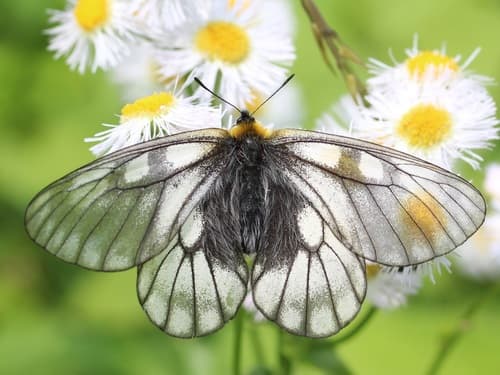
Identification TipsLook for white wings with strong black venation, large black spots, and prominent red or orange ocelli on the hindwings. Typically found in high-altitude alpine habitats.
Description
A medium-sized white butterfly with prominent black veins, large black spots, and distinctive red or orange ocelli (eyespots) on its hindwings, adapted to high-altitude environments.