Grape Fruit Piercer
Common NameGrape Fruit Piercer
Scientific NamePhyllodes imperialis
FamilyErebidae
SubfamilyErebinae
Wingspan (mm)145
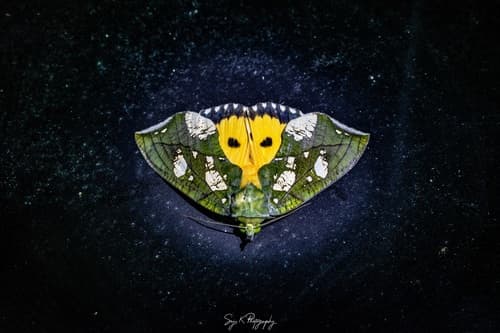
Primary Colorsgreen, brown, yellow, black, white
HabitatTropical and subtropical rainforests, wet sclerophyll forests
Geographic RangeSoutheast Asia, New Guinea, Australia
Host PlantsStephania japonica, Sarcopetalum harveyanum, Carronia multisepalea
Flight PeriodYear-round in tropical regions, seasonal in subtropical areas
Flight Stylefluttering
Conservation Statusvulnerable
Lifecycle NotesEggs are laid on host plants. Larvae are large, often green or brown with false eyespots, feeding on leaves. Pupation occurs in a cocoon. Adults are nocturnal and feed on fruit juices.
Identification TipsDistinguished by its large size, remarkable dead-leaf camouflage on the forewings, and the distinctive yellow and black 'skull' pattern on the hindwings, which are typically hidden at rest but revealed as a startle display.
Description
This large, nocturnal moth is renowned for its exceptional camouflage, with forewings that perfectly mimic a dead leaf, and hindwings featuring a vivid yellow and black pattern resembling a skull, used for startling predators.