Gray Woodgrain Moth
Common NameGray Woodgrain Moth
Scientific NameMorrisonia evicta
FamilyNoctuidae
SubfamilyNoctuinae
Wingspan (mm)32
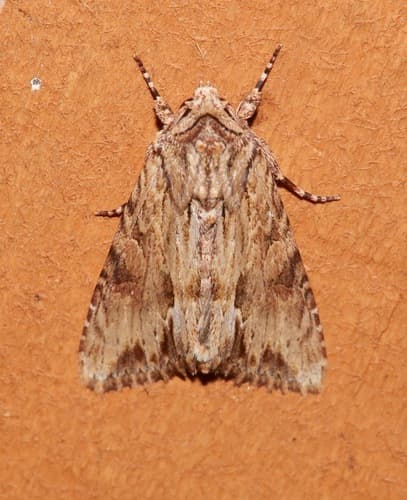
Wing Patterncryptic
Primary Colorsgray, brown, white
HabitatDeciduous forests, woodlands, forest edges
Geographic RangeEastern North America, from Nova Scotia south to Florida and west to Manitoba and Texas
Host Plantsoak, maple, birch, cherry, willow
Flight PeriodMarch to May
Flight Stylefluttering
Conservation Statusleast-concern
Lifecycle NotesLarvae feed on deciduous tree leaves in spring, then pupate in the soil, overwintering as pupae before adults emerge the following spring.
Identification TipsLook for its distinctive wood-grain camouflage pattern and its early spring flight period. The forewings often display subtle reniform and orbicular spots integrated into the overall cryptic design.
Description
The Gray Woodgrain Moth features forewings with a highly cryptic, mottled pattern of light gray, brown, and white scales, effectively mimicking tree bark. Its robust body and antennae are similarly patterned, aiding in camouflage.