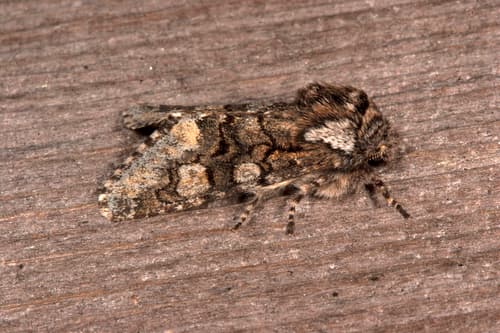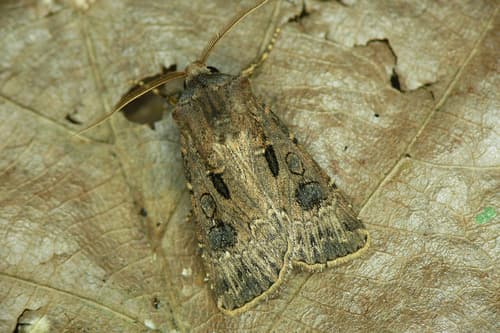
Great Dart
Common NameGreat Dart
Scientific NameAgrotis bigramma
FamilyNoctuidae
SubfamilyNoctuinae
Wingspan (mm)55
Wing Patterncryptic
Primary Colorsbrown, grey, black
HabitatOpen grasslands, meadows, cultivated fields, gardens
Geographic RangeEurope, North Africa, temperate Asia to Japan
Host Plantsvarious herbaceous plants, grasses, roots of crops
Flight PeriodJuly to October
Flight Stylefluttering
Conservation Statusleast-concern
Lifecycle NotesEggs are laid on host plants. The larvae are polyphagous cutworms, feeding at night on roots and lower stems of various herbaceous plants, and pupate in the soil.
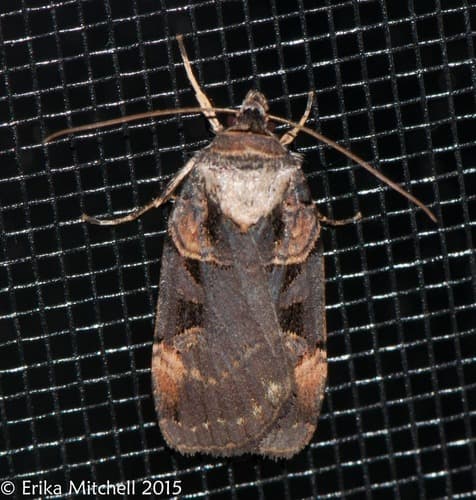
Identification TipsKey features include its relatively large size for a dart moth, the distinct black-outlined reniform and orbicular spots on the forewings, and the overall mottled brown-grey cryptic pattern. The hindwings are typically plain and paler.
Description
A medium-sized moth with cryptic brown and grey forewings featuring prominent black reniform, orbicular, and claviform stigmata, often outlined in black. Its coloration provides excellent camouflage against bark or dead leaves.