Hickory Tussock Moth
Common NameHickory Tussock Moth
Scientific NameLophocampa caryae
FamilyErebidae
SubfamilyArctiinae
Wingspan (mm)45
Wing Patternspotted
Primary Colorsbrown, cream, orange
HabitatDeciduous forests, woodlands, suburban areas, orchards
Geographic RangeEastern North America, from southern Canada to Florida and west to Texas
Host Plantshickory, walnut, ash, elm, oak, willow, maple
Flight PeriodMay to July
Flight Stylefluttering
Conservation Statusleast-concern
Lifecycle NotesThe larvae are distinctive, covered in dense tufts of black and white hairs, and are known to be gregarious when young. They pupate in a cocoon incorporating their hairs.
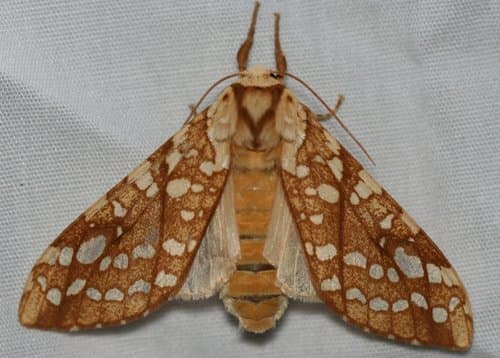
Identification TipsLook for the characteristic brown forewings with irregular cream-colored spots and the bright yellowish-orange abdomen. The antennae are bipectinate (comb-like) in males.
Description
A medium-sized moth with mottled brown and cream forewings, featuring irregular white or cream spots and a yellowish-orange abdomen. The hindwings are typically pale and unmarked.