Huckleberry Sphinx
Common NameHuckleberry Sphinx
Scientific NamePaonias astylus
FamilySphingidae
SubfamilySmerinthinae
Wingspan (mm)75
Wing Patterncryptic
Primary Colorsorange, brown, pink, black
HabitatDeciduous forests, woodlands, shrublands, and areas with host plants
Geographic RangeEastern North America, from Nova Scotia south to Florida, and west to Michigan and Mississippi
Host PlantsHuckleberry (Gaylussacia spp.), Blueberry (Vaccinium spp.), Cranberry (Vaccinium macrocarpon), Birch (Betula spp.), Willow (Salix spp.), Cherry (Prunus spp.)
Flight PeriodMay to August
Flight Styledarting
Conservation Statusleast-concern
Lifecycle NotesEggs are laid on host plants, developing into green caterpillars with a caudal horn. Larvae pupate in the soil or leaf litter, and adults emerge to feed on nectar.
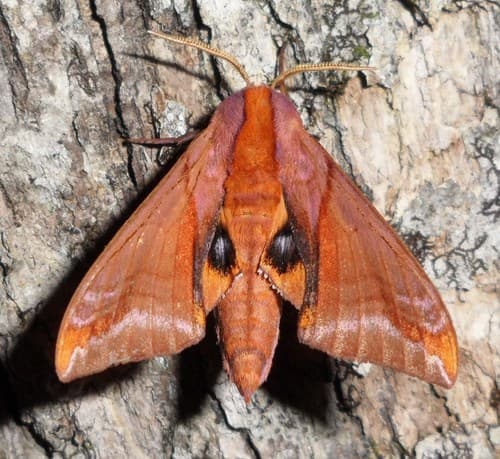
Identification TipsLook for the reddish-brown forewings with a purplish-pink wash on the thorax and wing bases. The species is characterized by large, black and blue eyespots on the hindwings, revealed when the moth is disturbed, and distinct black markings on the dorsal body.
Description
This medium-sized sphinx moth features reddish-brown forewings with subtle wavy lines and a prominent purplish-pink wash on the thorax and wing bases. Its stout body is orange-brown with distinct black markings.