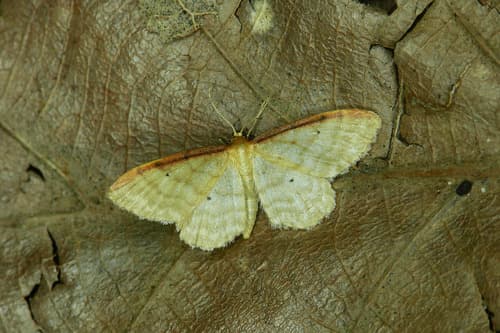
Isle of Wight Wave
Common NameIsle of Wight Wave
Scientific NameIdaea humiliata
FamilyGeometridae
SubfamilySterrhinae
Wingspan (mm)20
Primary Colorspale yellow, white, reddish-brown, black
HabitatCoastal grasslands, heathland, open woodland edges, often in sandy or chalky areas.
Geographic RangeWestern and Central Europe, including the British Isles (primarily southern England).
Host Plantsbedstraws (Galium spp.), dandelion (Taraxacum spp.), other low-growing herbaceous plants
Flight PeriodJuly to August
Flight Stylefluttering
Conservation Statusleast-concern
Lifecycle NotesThe larvae are 'loopers' or 'inchworms' and feed on various low-growing herbaceous plants. They overwinter as larvae and pupate in a flimsy cocoon near the ground.
Identification TipsLook for the combination of pale, almost translucent wings, the reddish-brown costal stripe, and the subtle wavy cross-lines. The small size and delicate appearance are also characteristic.
Description
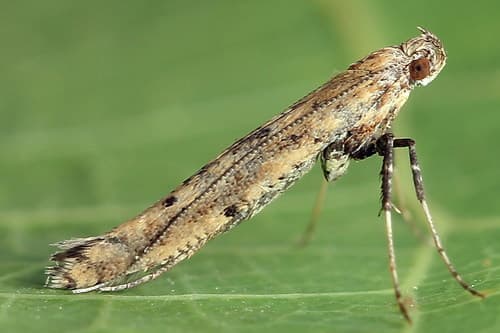
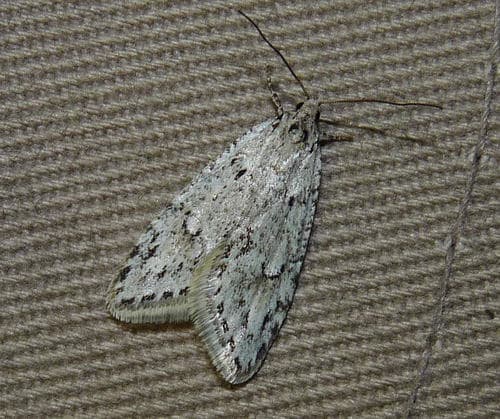
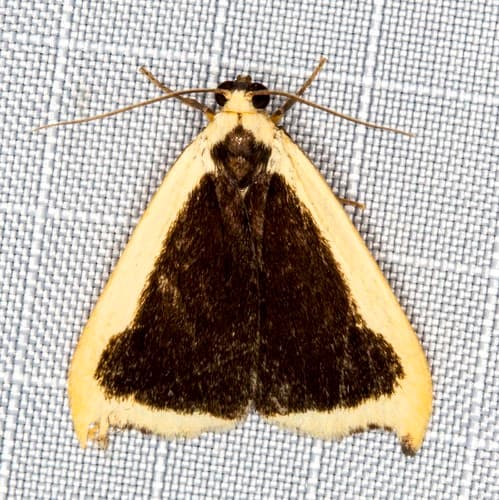
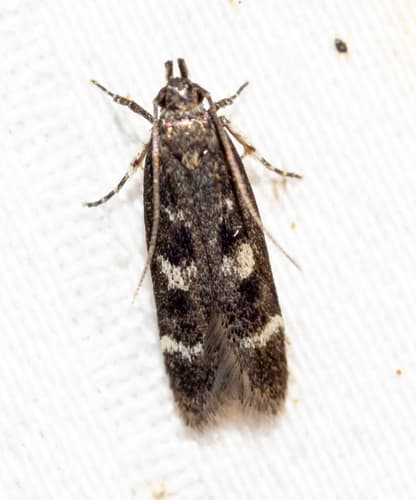
A small, delicate moth with pale yellowish-white wings marked by faint, wavy transverse lines. It features a distinctive reddish-brown band along the leading edge of the forewings and small black discal spots on both fore and hindwings.