Julianata Moth
Common NameJulianata Moth
Scientific NameEulepidotis julianata
FamilyErebidae
SubfamilyEulepidotinae
Wingspan (mm)30
Primary Colorsbrown, cream, blue
HabitatTropical and subtropical forests, woodlands, disturbed areas
Geographic RangeSouthern United States (Florida, Texas, Arizona), Mexico, Central America, South America
Host PlantsMimosa spp., Acacia spp., Inga spp.
Flight PeriodYear-round in tropical regions; spring to fall in subtropical areas
Conservation Statusleast-concern
Lifecycle NotesLike most moths, it undergoes complete metamorphosis: egg, larva (caterpillar), pupa, and adult. Larvae are typically cryptic, feeding on host plants before pupating.
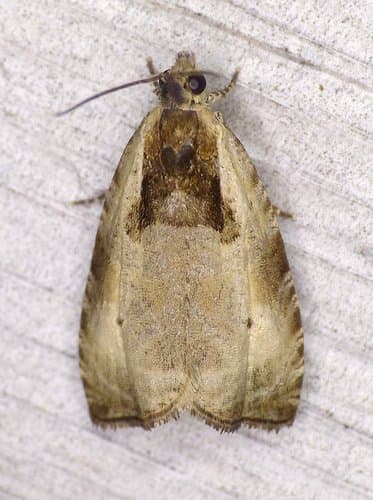
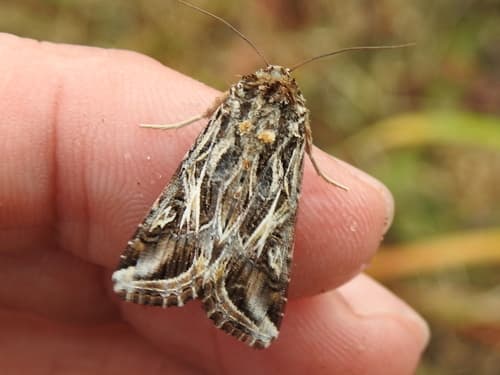
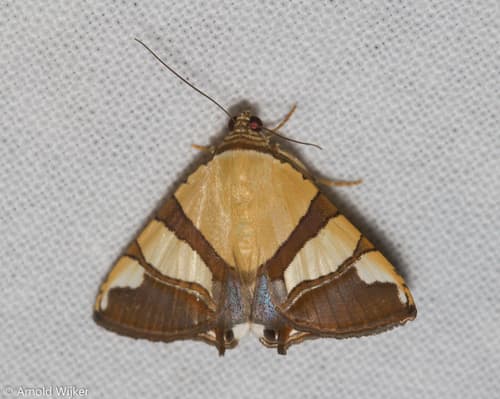
Identification TipsLook for the prominent, contrasting diagonal bands on the forewings and the iridescent blue scaling on the hindwings, which is often visible even when the moth is at rest.
Description
This moth features forewings with striking diagonal bands of pale cream and rich reddish-brown, while the hindwings are predominantly dark brown with a distinctive iridescent blue patch near the body.