Lacebark Looper
Common NameLacebark Looper
Scientific NamePatalene olyzonaria
FamilyGeometridae
SubfamilyEnnominae
Wingspan (mm)30
Primary Colorsyellow, tan, brown
HabitatWoodlands, forests, and areas with deciduous trees
Geographic RangeEastern North America, from Nova Scotia south to Florida and west to Texas and Manitoba
Host Plantsmaple, birch, hickory, beech, oak, elm, basswood
Flight PeriodMay to October
Flight Stylefluttering
Conservation Statusleast-concern
Lifecycle NotesThe larvae are 'loopers' or inchworms, feeding on the leaves of various deciduous trees. Pupation occurs in the soil or leaf litter, and the species typically overwinters as a pupa.
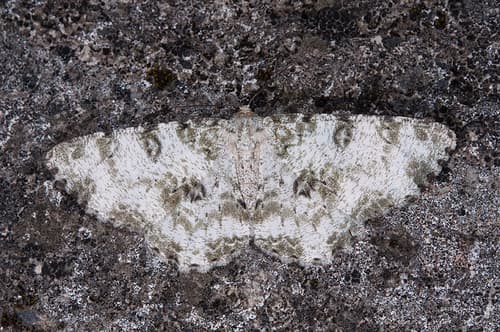
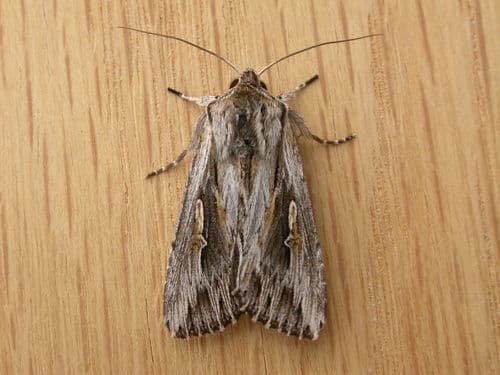
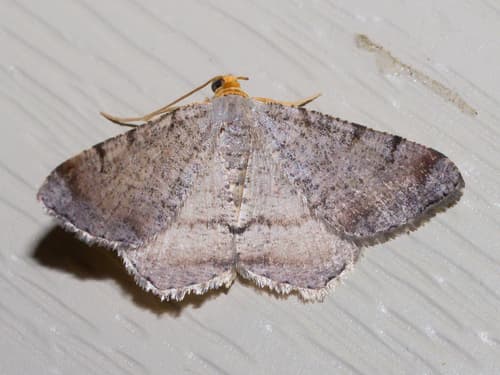
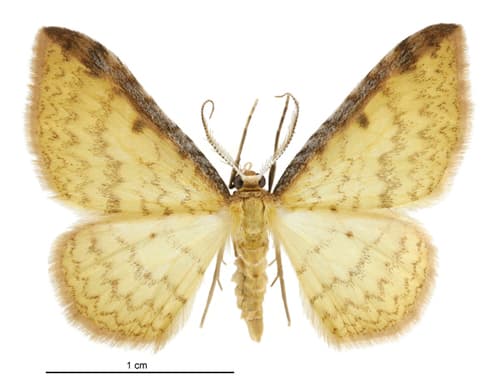
Identification TipsLook for the distinctive pale yellow to tan coloration with numerous fine, wavy brown lines and the darker brown costal margin on the forewings. The overall pattern provides camouflage against tree bark.
Description
This moth has pale yellow to tan wings with fine, wavy, darker brown lines across both forewings and hindwings. The forewings feature a darker brown band along the costal margin and small, faint discal spots.