Lederhosen Moth
Common NameLederhosen Moth
Scientific NameOrgyia antiqua
FamilyErebidae
SubfamilyLymantriinae
Wingspan (mm)30
Primary Colorsdark brown, black, white, red-orange
HabitatDeciduous and mixed forests, woodlands, parks, gardens, hedgerows
Geographic RangeHolarctic (Europe, Asia, North America)
Host Plantsoak, willow, birch, apple, rose, hawthorn, hazel, larch, spruce
Flight PeriodMay to October
Flight Stylefluttering
Conservation Statusleast-concern
Lifecycle NotesFemales are wingless and remain on their cocoons, laying eggs there. Larvae are distinctive, hairy caterpillars with prominent tussocks of hair. Pupation occurs in a silk cocoon.
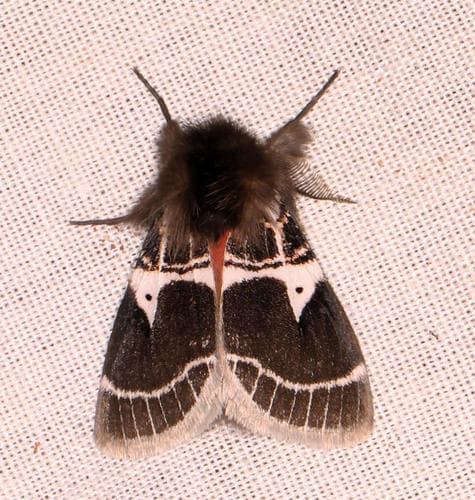
Identification TipsMales are identified by their dark, fuzzy body, bipectinate antennae, and the distinct white band and triangular spot on the forewings, combined with a reddish-orange abdomen. Females are unmistakable due to their wingless, sac-like appearance.
Description
A medium-sized, very fuzzy moth. Males have dark brown to black forewings marked with a prominent, irregular white band and a triangular white spot, and a reddish-orange abdomen. Females are flightless and wingless.