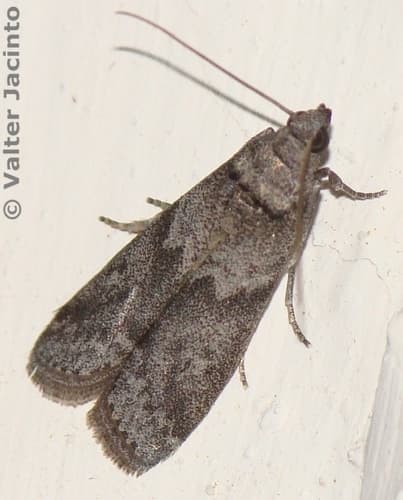
Locust bean moth
Common NameLocust bean moth
Scientific NameEctomyelois ceratoniae
FamilyPyralidae
SubfamilyPhycitinae
Wingspan (mm)23
Primary Colorsgrey, brown
HabitatAgricultural areas, orchards, dry Mediterranean climates, stored product facilities
Geographic RangeMediterranean region, Middle East, Africa, parts of Asia, North America (introduced), Australia (introduced)
Host Plantscarob, date, pomegranate, citrus, pistachio, almond, walnut, pecan
Flight PeriodMultiple generations, year-round in warm climates
Flight Stylefluttering
Conservation Statusleast-concern
Lifecycle NotesLarvae are internal feeders, developing within a wide range of fruits, nuts, and seeds. Pupation occurs either inside the host material or in nearby debris. The species has multiple generations per year.
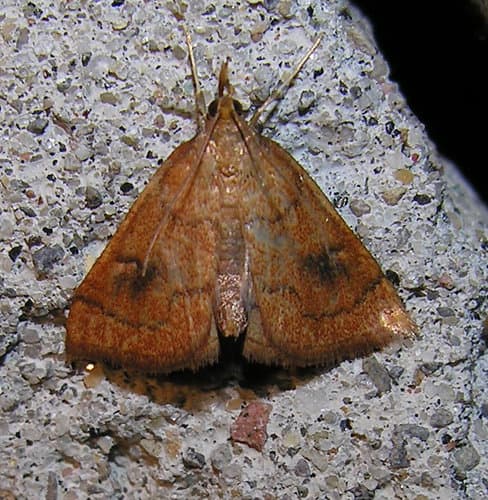
Identification TipsDistinguished by its mottled grey-brown forewings with a somewhat indistinct pattern. Its small size and association with damaged fruits, nuts, or stored products are key indicators. Often requires examination to differentiate from similar phycitine moths.
Description
A small to medium-sized moth with mottled grey and brown forewings, often displaying indistinct darker bands and a somewhat cryptic pattern. The hindwings are typically paler.