Long-tailed Skipper
Common NameLong-tailed Skipper
Scientific NameUrbanus proteus
FamilyHesperiidae
SubfamilyEudaminae
Wingspan (mm)55
Wing Patternspotted
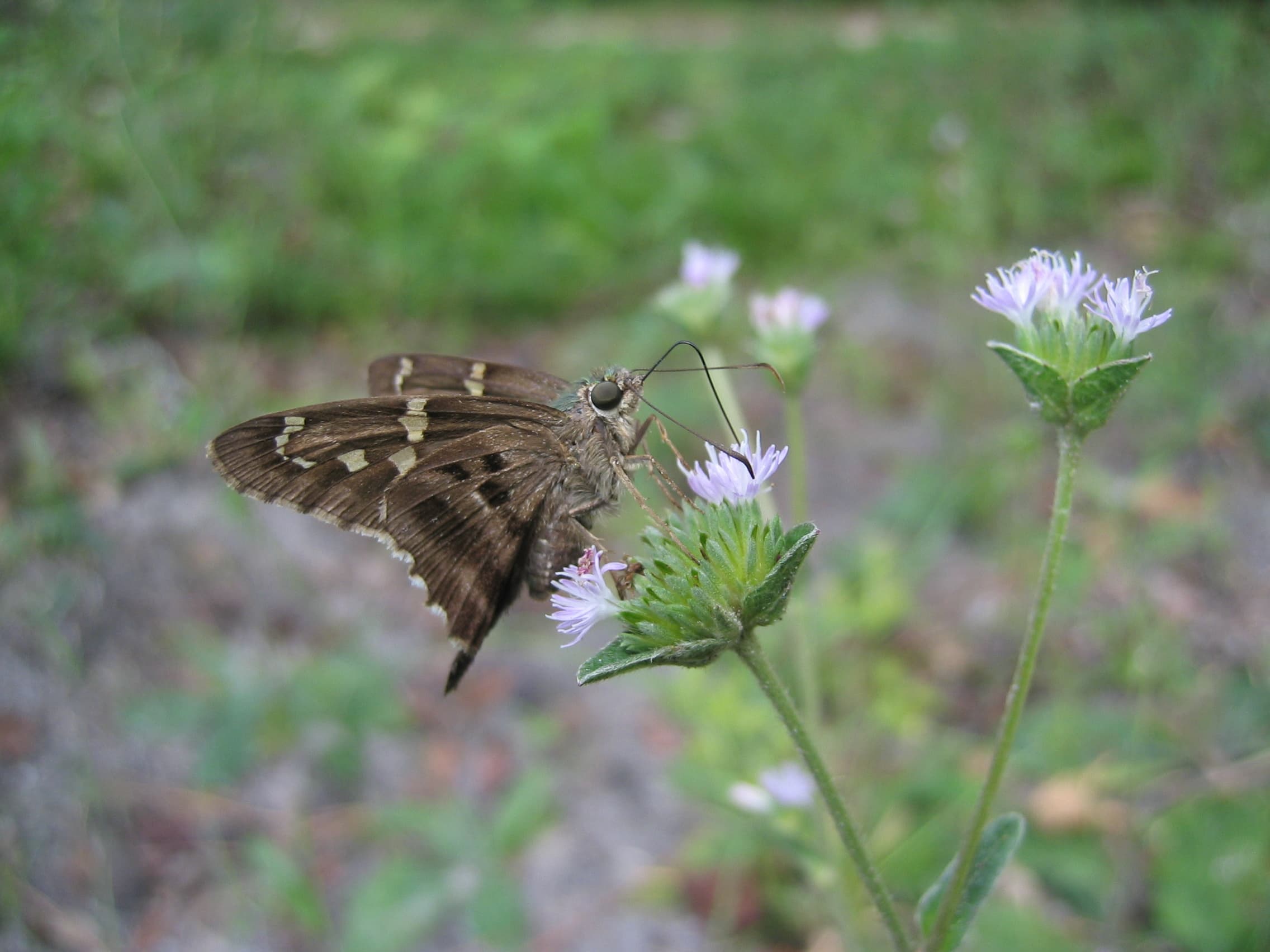
Primary Colorsbrown, black, iridescent blue-green
HabitatOpen, disturbed areas, gardens, fields, forest edges, roadsides
Geographic RangeSouthern United States (from Maryland south to Florida, west to California), Mexico, Central America, South America. Migrates north.
Host Plantsbeans (Phaseolus), peas (Pisum), wisteria, tick-trefoil (Desmodium), clover (Trifolium), alfalfa (Medicago sativa)
Flight PeriodYear-round in tropical areas; multiple broods from spring to fall in temperate regions (e.g., March-November in Florida, May-October in northern parts of its range)
Flight Styledarting
Conservation Statusleast-concern
Lifecycle NotesEggs are laid singly on host plants. Larvae are green with yellow stripes and a dark head, feeding on legumes. They pupate in a loose cocoon, often within a folded leaf.
Identification TipsKey features include the very long tails on the hindwings, the iridescent blue-green body and hindwing base, and the small, clear (hyaline) spots on the forewings. Its flight is typically fast and erratic.
Description
A medium-sized skipper with dark brown wings, distinctive long tails on the hindwings, and iridescent blue-green scaling on the body and hindwing bases. Its forewings feature several small, translucent (hyaline) spots.