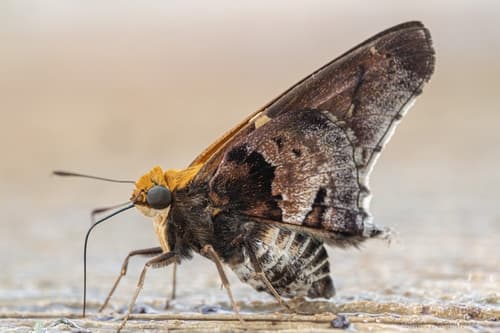
Mercurial Skipper
Common NameMercurial Skipper
Scientific NamePanoquina sylvicola
FamilyHesperiidae
SubfamilyHesperiinae
Wingspan (mm)40
Wing Patternspotted
Primary Colorsbrown, yellow, black
HabitatOpen, sunny areas, fields, gardens, forest edges, disturbed areas, often near water.
Geographic RangeSouthern United States (Florida, Texas, Arizona), Mexico, Central America, and parts of South America.
Host Plantssugarcane, Guinea grass, various large grasses
Flight PeriodYear-round in tropical regions, multiple broods from spring to fall in subtropical areas.
Flight Styledarting
Conservation Statusleast-concern
Lifecycle NotesUndergoes complete metamorphosis. Larvae are grass feeders, constructing shelters by rolling leaves. Pupation occurs within these shelters.
Identification TipsLook for the distinctive yellowish-orange head and thorax, combined with the dark brown wings that have small, often indistinct, translucent spots on the forewing. The hooked antennae are characteristic of skippers.
Description
A medium-sized skipper with a robust, yellowish-orange head and thorax. Its wings are dark brown, featuring a few small, translucent yellowish spots on the forewing and a mottled brown and grey underside on the hindwing.