N/A (no widely accepted common name)
Common NameN/A (no widely accepted common name)
Scientific NameHomoeosoma vagella
FamilyPyralidae
SubfamilyPhycitinae
Wingspan (mm)21
Wing Patterncryptic
Primary Colorsgrey, white, black
HabitatOpen fields, meadows, disturbed areas, and gardens where host plants are present.
Geographic RangeNorth America, primarily eastern and central United States and parts of Canada.
Host PlantsAmbrosia (ragweed), Helianthus (sunflower), Solidago (goldenrod), Aster
Flight PeriodMay to October, with multiple generations per year.
Flight Stylefluttering
Conservation Statusleast-concern
Lifecycle NotesLarvae are internal feeders, developing within the seeds or flower heads of various composite plants (Asteraceae). Pupation typically occurs in a cocoon in the soil or leaf litter.
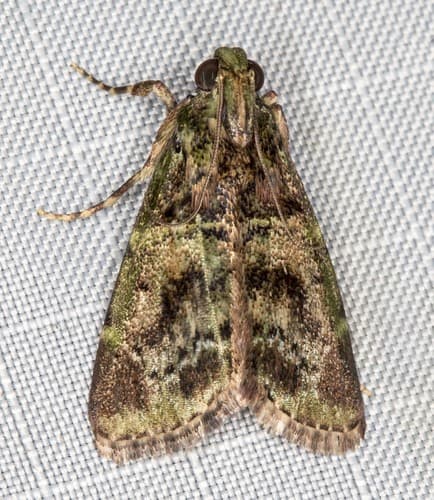
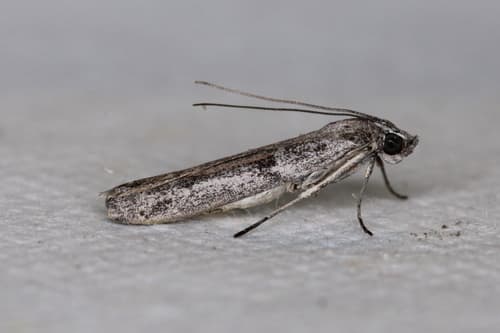
Identification TipsDistinguished by its slender body, mottled grey and white forewings with indistinct darker markings, and the typical roof-like resting posture of Phycitinae moths.
Description
A small, slender moth with mottled grey and white forewings, often appearing speckled or streaked with darker scales, and prominent dark compound eyes.