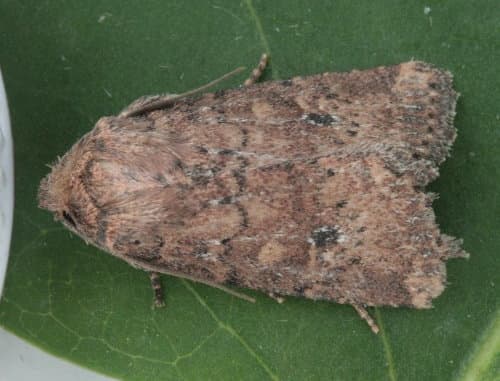
Northern Scurfy Quaker
Common NameNorthern Scurfy Quaker
Scientific NameLithophane semiusta
FamilyNoctuidae
SubfamilyXyleninae
Wingspan (mm)41.5
Wing Patterncryptic
Primary Colorsbrown, grey, black
HabitatDeciduous forests, woodlands
Geographic RangeEastern North America, from Nova Scotia south to Florida and west to Texas and Manitoba
Host Plantsoak, maple, birch, willow, cherry, hickory
Flight PeriodSeptember to November (fall brood), March to May (spring brood)
Flight Stylefluttering
Conservation Statusleast-concern
Lifecycle NotesLarvae are green with white stripes and feed on the leaves of various deciduous trees in late spring and early summer. They pupate in the soil, and adults emerge in the fall to overwinter, becoming active again in early spring.
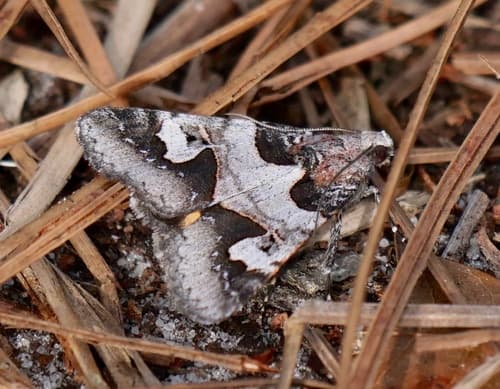
Identification TipsLook for its mottled brown and grey forewings with a 'scurfy' texture and indistinct markings. Its unique flight period, active in both fall and early spring after overwintering as an adult, is a key identifier.
Description
A medium-sized moth with mottled brown and greyish-brown forewings, featuring indistinct darker spots and lines that provide excellent camouflage against tree bark.